A Place for Everyone: Home Court at the Obama Presidential Center
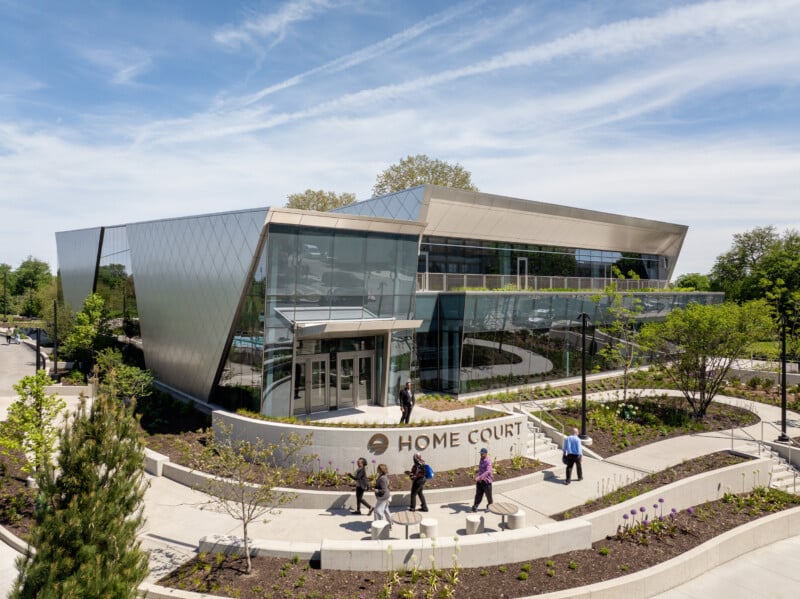
There’s a version of the Obama Presidential Center story that writes itself: a landmark museum, celebrated architects, and a historic president. Quietly beside, there is another story, one we helped shape because we are uniquely suited to do so.
When Moody Nolan was commissioned to design Home Court, the community gathering space at the Obama Presidential Center, we understood that the most important decision we could make wasn’t structural or material. It was about who the building invites inside from the sidewalk.
Home Court is approachable in scale by intention. The entry doesn’t ask you to rise to meet it, and the sight lines from the street are clear. This approachability says something specific to the South Side community surrounding it: you are welcome here, as the person this place was made for.

Home Court’s juxtaposition to the museum is intentional, both in design and location, as a complement. It’s a space that makes no distinction between who is welcome and who is not.
As the largest African American–owned architecture firm in the country, we do not arrive at a project on the South Side of Chicago without history in our hands. We know what these neighborhoods have been told about what they deserve. We’ve seen the infrastructure that routes around rather than through, and the institutions that treat proximity to certain communities as a burden rather than a benefit.
We also know what it feels like when a building gets it right.
When we considered the scale of Home Court, we were thinking about legibility for people who live within walking distance. When we talked about the entry, we were thinking about the kid from the South Side, who needs a place to take refuge after school.
While a community center on the Obama Presidential campus is unmatched by notoriety, for Moody Nolan, spaces that erase the line between who is welcome and who is not are the foundation of why we exist.
“Home Court supports the Center’s mission as a forum for community, connection, and civic engagement. The process of architectural design embodies these values, for it is an act of hope. The outcome of which endures as a conversation between what is seen and how it is experienced.”
Renauld D. Mitchell, Partner in Charge
“Transformational humility, is the best way I can describe what it’s felt like to bring this vision to life.”
Jonathan Moody, CEO