Designed to Serve: Expanding Access Through Public Libraries
When was the last time you walked into a building that asked nothing of you? No purchase, no membership fee, no appointment—just a comfortable space with a world of resources at your fingertips. Public libraries are one of the few remaining places built entirely to serve, offering access to information, refuge, and resources in a way no other civic institution does, and with almost no barrier to entry.
Public libraries emerged during the late 19th and early 20th centuries as cities expanded their branch systems to bring information closer to where people lived. Up until that point, libraries mostly operated as private, exclusive collections reserved for scholars and wealthy elites. The expansion of these neighborhood branches institutionalized the concept of universal access, making sure everyone had the tools for self-improvement. Even during economic downturns and periods of social upheaval, people turned to their local library because it remained free, open, and dependable when other forms of support were harder to come by.
Public libraries still operate on the basis of free, open access. For marginalized populations, they function as critical safety nets, often stepping in where other forms of assistance fall short. How this looks can vary drastically from one branch to the next. Understanding a community’s specific social and economic pressures determines not only what a branch offers, but how it operates, looks, and feels. A neighborhood with a high density of children, for instance, may depend on more after-school programming and specialized youth spaces, whereas one with a higher adult population might prioritize quiet workspaces.
Even within a single city, libraries can take on radically different forms while advancing the same public mission. Columbus Metropolitan Library’s Karl Road, Linden, and Martin Luther King branches demonstrate how design expands access to three key areas: digital equity, youth support, and community connection, in ways that are tailored to their respective communities.
How public libraries are closing the digital divide
Applying for jobs, completing school assignments, or accessing government services can be nearly impossible without a reliable internet connection. This lack of connectivity, combined with limited access to technology and the proficiency to use it, is what defines the digital divide. As with many systemic barriers, whether someone participates in the digitized world is largely determined by their income and zip code. According to 2025 Pew Research Center data, only 54% of adults in households earning under $30,000 annually have home broadband, compared to 94% of those earning $100,000 or more.¹
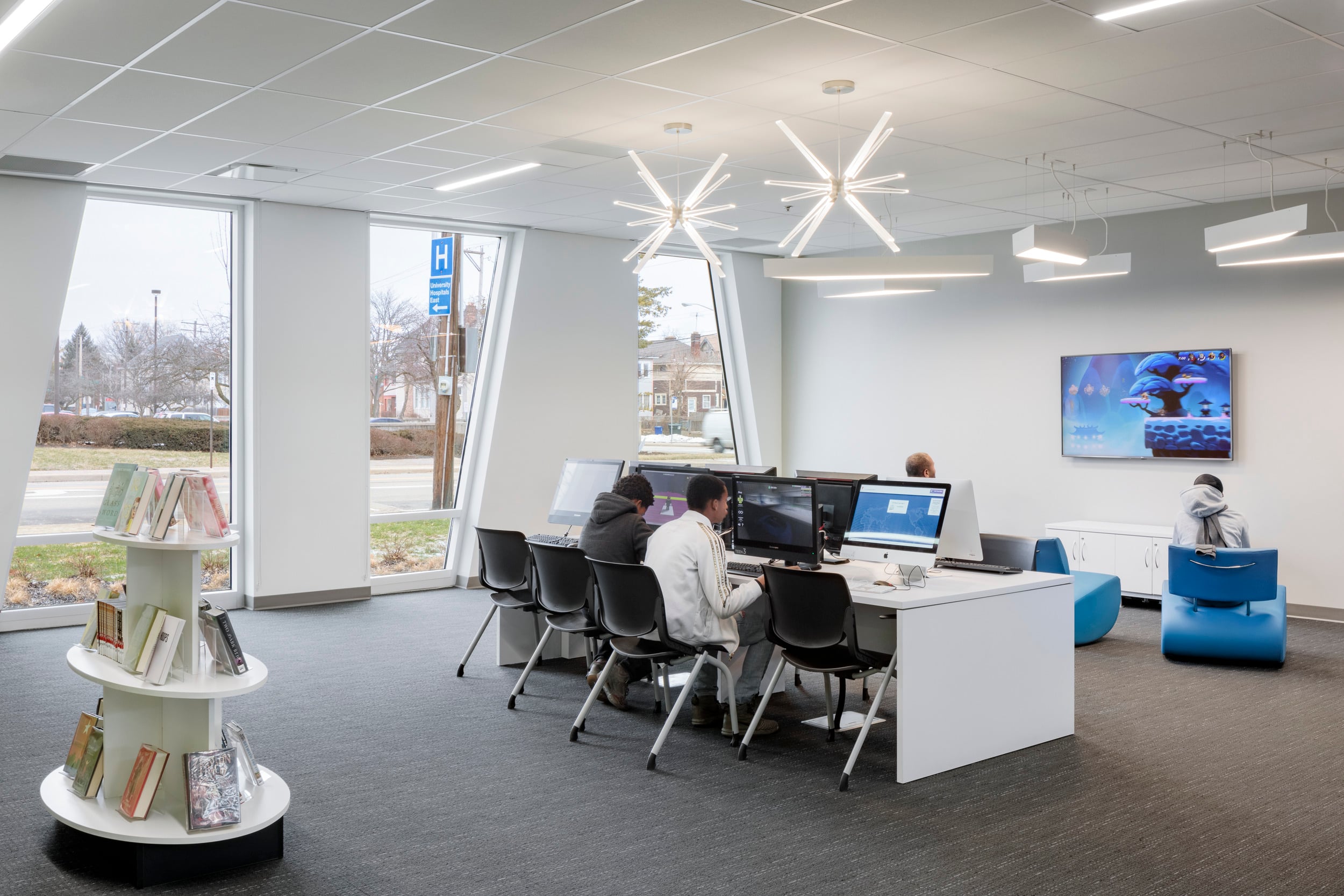
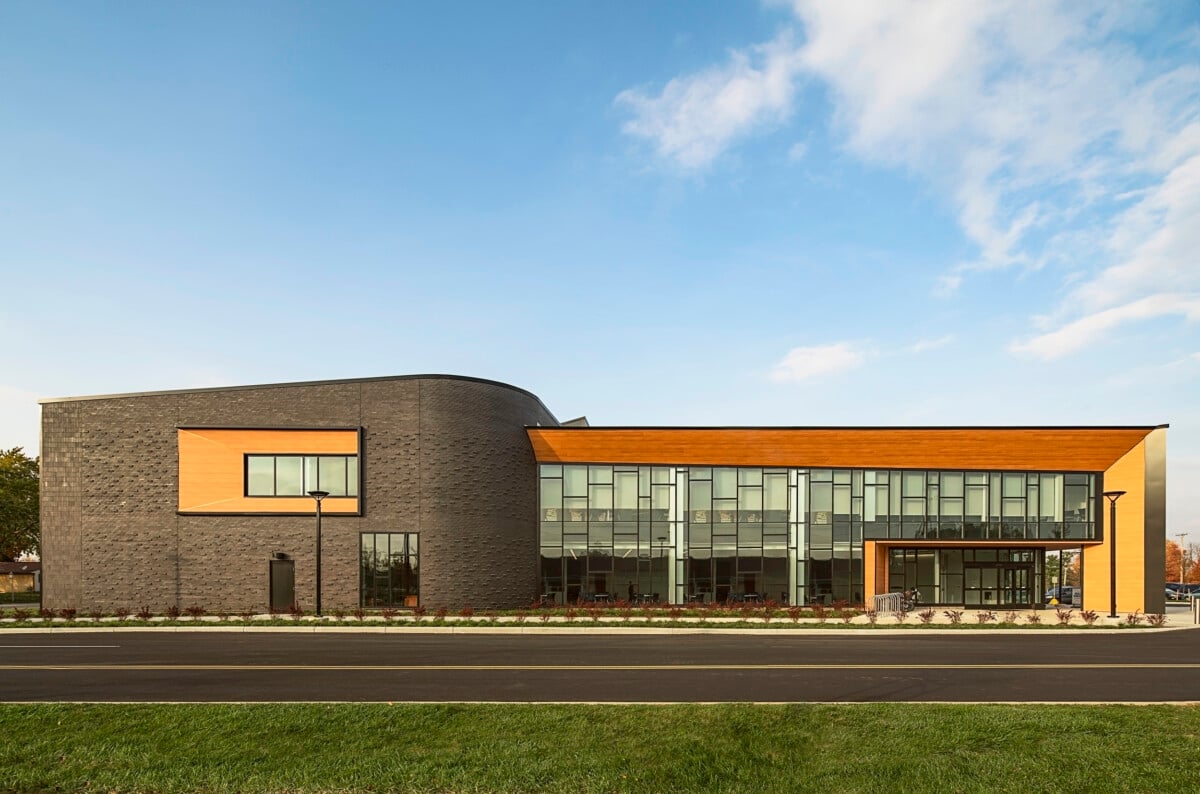
Libraries bridge this divide by making technology and the resources needed to use them both free and accessible. At the Karl Road Branch, computers and other digital tools are not confined to a single lab, nor are they tucked away. Instead, they’re distributed across the branch’s many age-specific zones, including children and teen spaces, with nearby staff stations for support. The branch also includes several classroom-style meeting rooms with audio/visual capabilities for hosting various digital courses, from basic computer use to job-ready technology skills.
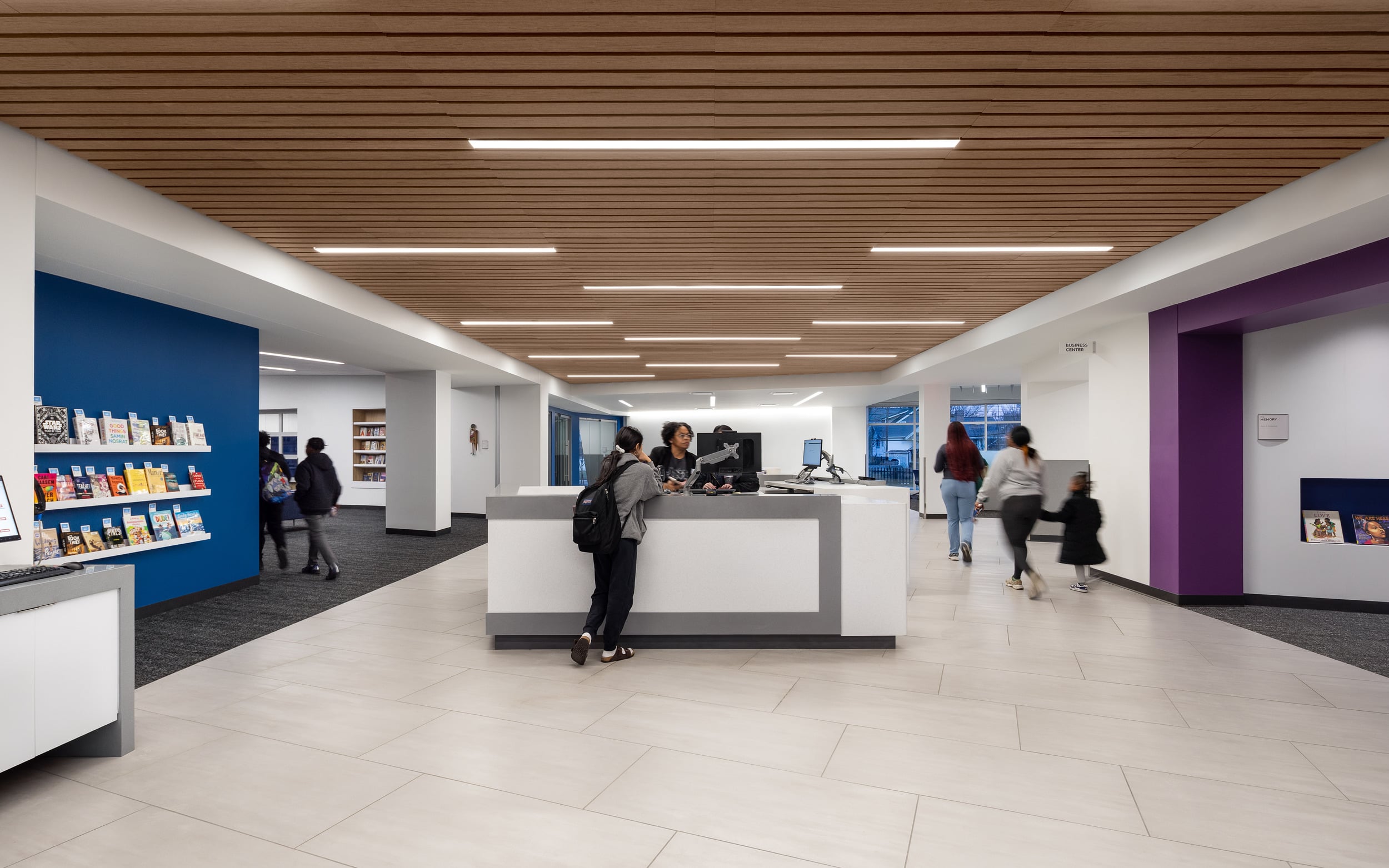
Across urban centers, these national disparities are mostly concentrated in formerly redlined neighborhoods, where past discriminatory policies continue to shape present-day conditions. In Columbus’ King-Lincoln Bronzeville neighborhood, 39% of residents lack stable home internet and 11% have no internet access at all, with many households citing monthly subscription costs as the leading barrier.² The Martin Luther King Branch addresses these disparities by making digital access a core part of the patron experience. Centralized computer stations are positioned along the branch’s main circulation path, keeping technology visible and accessible throughout the day. Dedicated youth labs blend technology into social spaces. Lounge seating and whiteboards soften the room, so digital learning and troubleshooting feel both familiar and low-pressure.
At the Karl Road Branch, computers and other digital tools are not confined to a single lab or tucked away. Instead, they’re distributed across the branch’s many age-specific zones, including children and teen spaces, with nearby staff stations for support. Patrons can choose to work in more open, active parts of the branch or settle into quieter areas better suited to focused work. The branch also includes several classroom-style meeting rooms with audio/visual capabilities for hosting various digital courses, from basic computer use to job-ready technology skills.
After-school and Educational Support
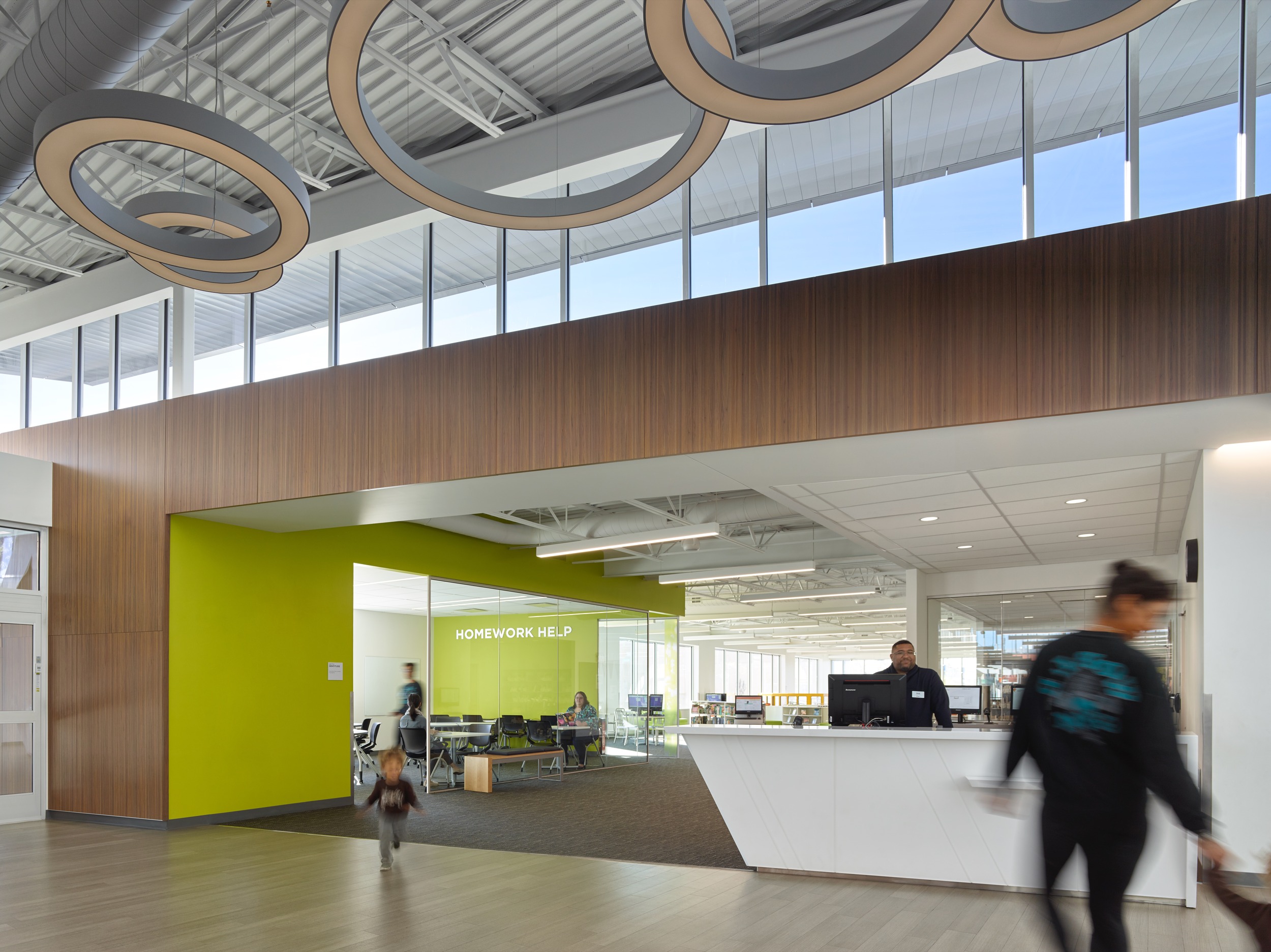
Beyond digital access, libraries give children and teens a safe place to go after school, whether for academic support or creative expression. All three branches include specialized spaces dedicated to supporting CPL’s early childhood and K-12 programs, along with additional programming unique to each community.
The children’s area at Karl Road reflects the growing number of new, young families in Columbus’ Northland neighborhood. Many of the children who use the branch are either immigrants themselves or come from immigrant families. For some, English is still new, and places like the library may feel unfamiliar at first.
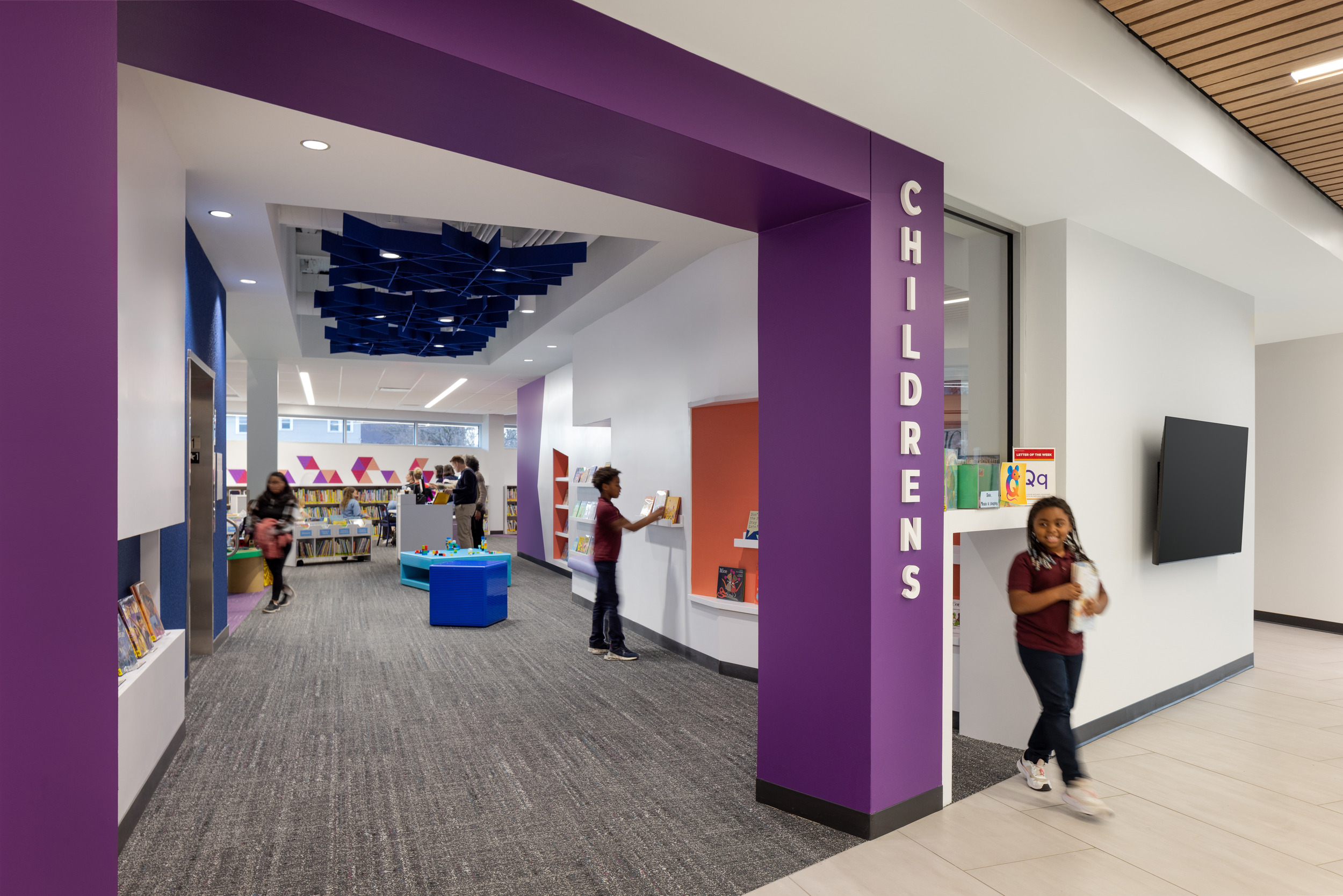
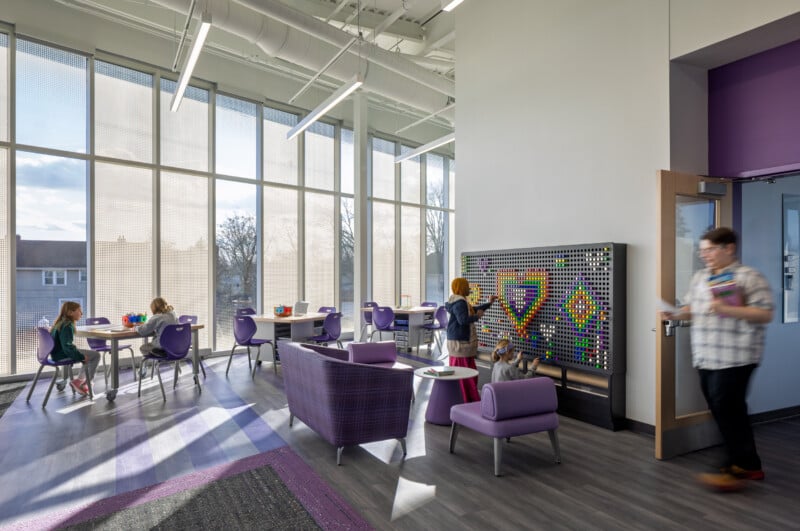
Spaces are organized by age groups, from pre-K through grade school. In the grade school area, small study tables are tucked between curved, low-profile stacks, creating pockets of privacy ideal for one-on-one tutoring. The pre-K area is more open and playful, with interactive elements integrated into the space to promote early literacy through hands-on exploration. Warm colors and abundant natural lighting create an atmosphere that feels inviting without becoming overstimulating.
A large garage-style door separates these two zones, allowing staff to buffer noise without fully disconnecting either space. Movable furniture adds another layer of flexibility, so staff can quickly reconfigure the area for different activities and programs throughout the day.
Creative Outlet
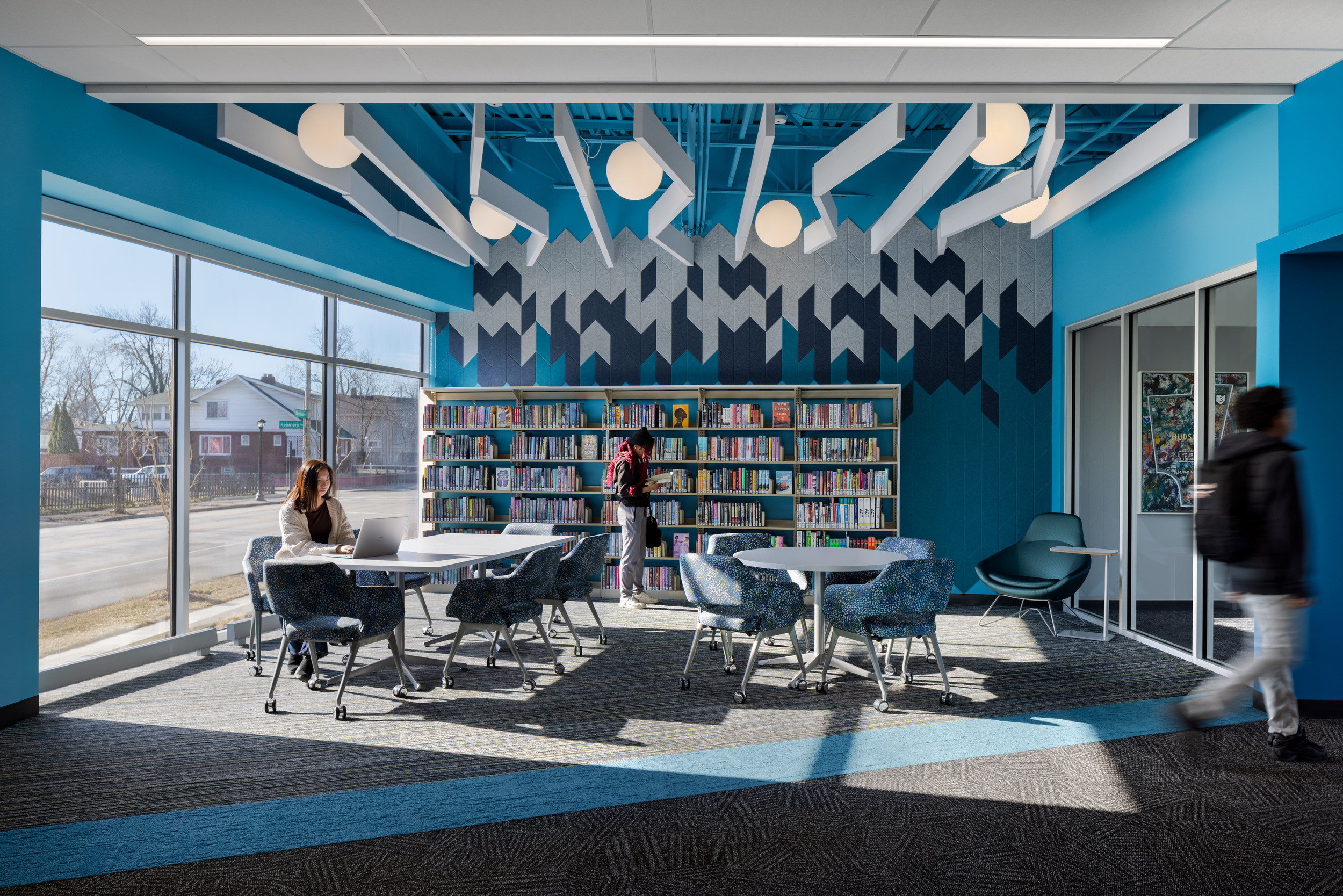
All three branches offer space for children and teens to explore creativity in different ways. At the Linden Branch, age-specific spaces are distributed across the building, so each group has room to engage without disrupting nearby patrons. On the ground floor, teen amenities include digital gaming stations, maker tables, and a dedicated place to work on projects or simply spend time with friends. A range of seating options supports different activities while open sightlines keep the area connected back to the branch’s central circulation desk.
Spaces for younger children take a more interactive approach. Colorful, visually engaging features spark creativity through hands-on play, including a draw-to-digital display that lets children animate their drawings in real time. The early childhood zone also includes open floor space for oversized building blocks, supporting play-based learning at a scale suited to younger users. Careful program zoning and sound-absorbing baffles help contain noise, allowing the library to remain open and visually connected.
Hubs for social connectivity
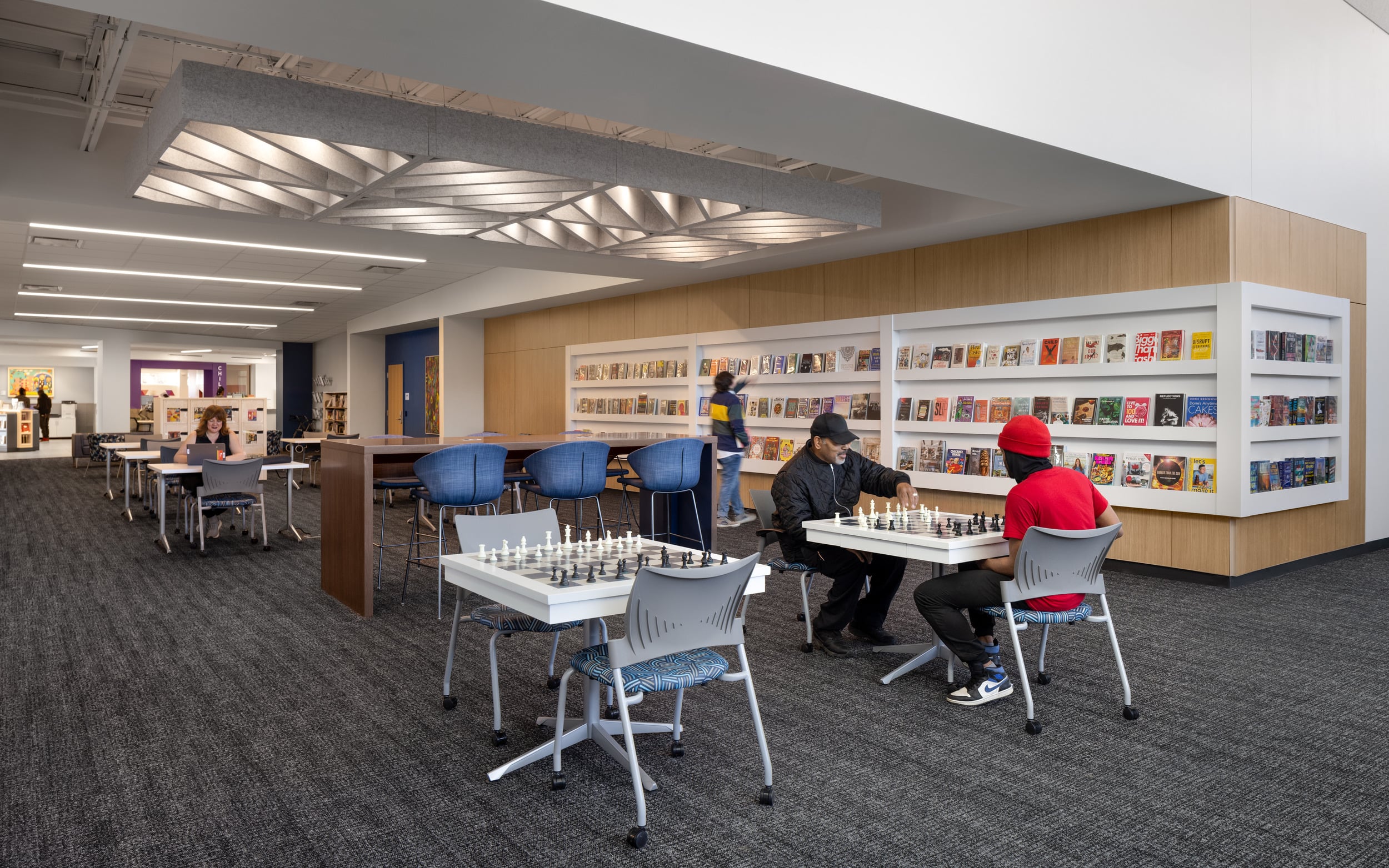
Not only do libraries connect people to resources, they also connect people to each other. When designed for connection, libraries function as third places—the public spaces that aren’t home and aren’t work, where people can exist without the expectation of spending money. In neighborhoods where commercial spaces may have declined, and public parks feel unsafe, libraries offer climate-controlled environments for community programming to take place.
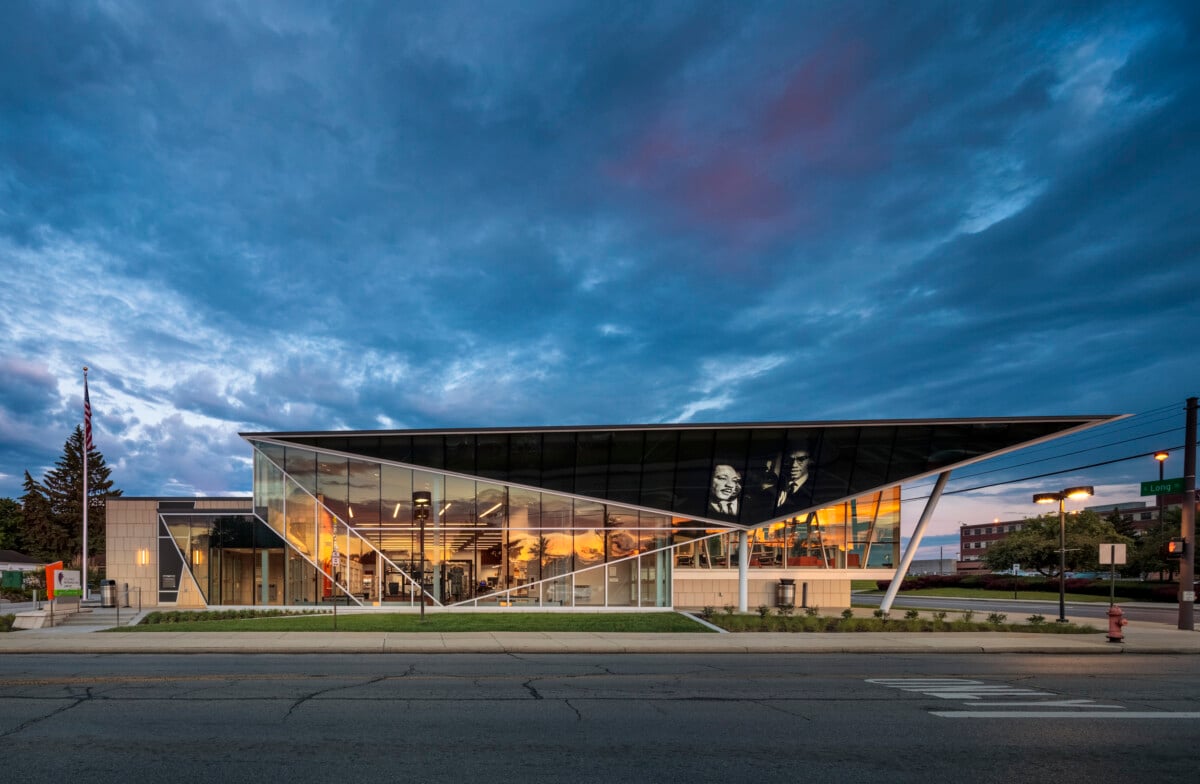
MLK’s exterior signals its role as a third place by making room for people to stay before they even step inside. The building’s signature reading porch takes cues from the neighboring historic homes, where front porches once served as sites for social exchange. Scaling the porch up for civic use lends the building a familiar, community-facing presence that helps lower the barrier to entry, and it creates a softer threshold between the street and the interior. The porch supports small, planned activities as well as impromptu interactions between community members.
A successful third place reveals itself through repeated use. When patrons feel like a place was meant for them, they’re more likely to return and to build a sense of ownership over time. One year after opening, visits to the MLK branch more than doubled. Children’s book checkouts climbed over 40%, and the branch issued more than 1,700 new library cards. As more of public life becomes priced and partitioned, public libraries remain one of the few places where access is not tied to spending power. Every design decision shapes how that access is felt, from how people arrive to how they move through a space, and whether they return. Understanding the specific communities we serve makes the difference between a building people pass and a place people keep coming back to.