Beyond Belonging: Architecture as an Act of Cultural Permanence
For Black and LGBTQ+ communities, the built environment has historically functioned as a tool of erasure, through surveillance, displacement, and exclusion. To undo these historical patterns, we aim to move beyond the language of inclusion and toward a collaborative practice of liberation, where Black and LGBTQ+ communities are positioned as authors of the design.
Community Co-Design as Method
Architecture has traditionally prioritized designing for communities instead of engaging with them directly. This approach often produces spaces that do not reflect the lived experiences, values, or spatial needs of their intended users. For Black and LGBTQ+ communities, these failures continue the exclusionary dynamics design intended to address.
The cost of that failure is not abstract. Mara Rae Betti, AIA, NOMA, LEED AP, Project Manager, an architect and trans woman, describes what happens the moment a space signals it wasn’t designed for her:
“I know that I immediately need to start developing a safety plan. This plan not only includes locating the nearest unisex, single-user toilet room, but it also includes a whole set of other impromptu planning: making a contingency plan, slowing my food and drink intake, and forming an early exit strategy from the event.”
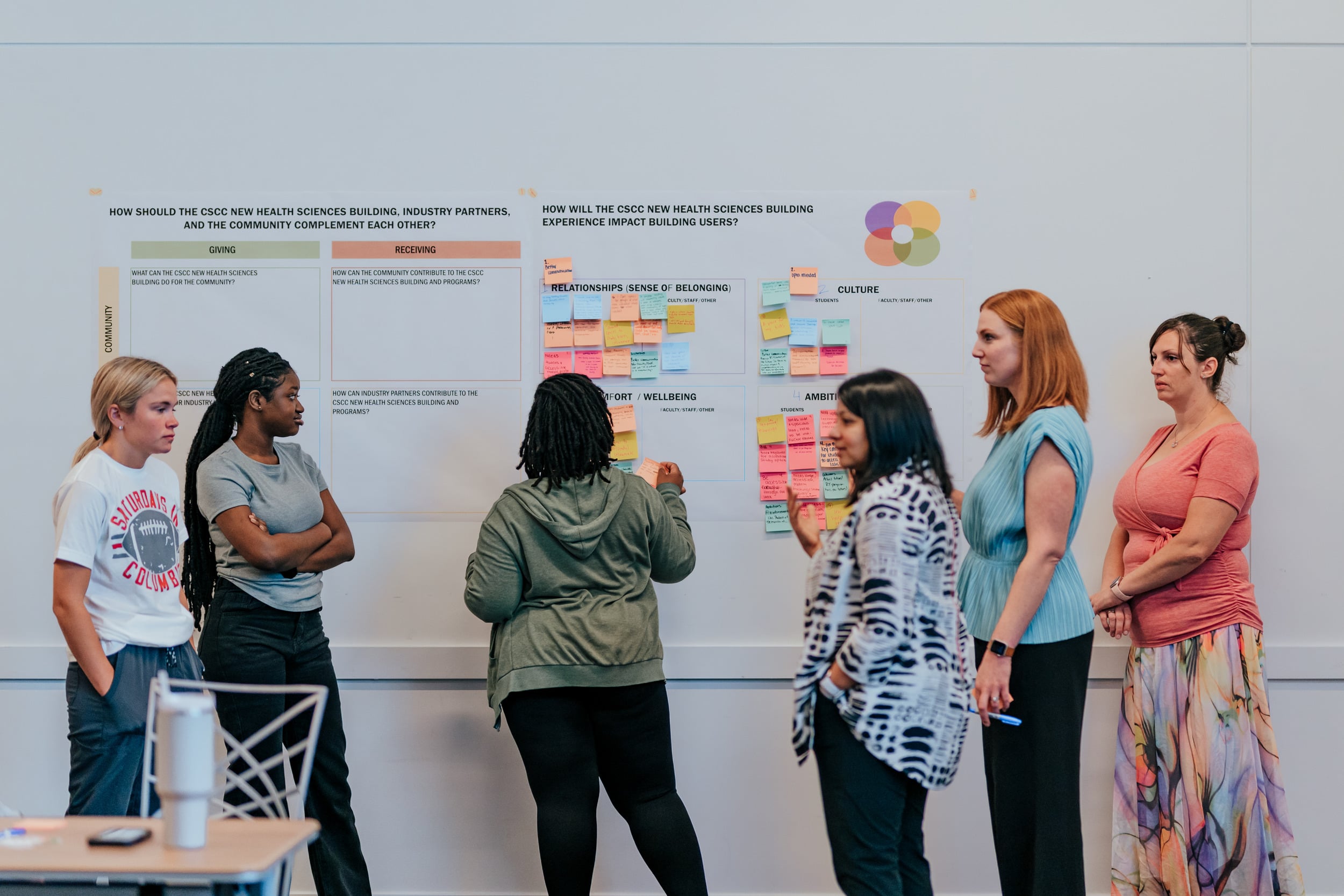
This involuntary and exhausting mental calculus, often invisible to others, is precisely what structured community listening seeks to disrupt. Prior to initiating design work, we conduct listening sessions to understand how individuals experience space, what contributes to their sense of safety or vulnerability, their aspirations, and their concerns about potential losses. These insights inform a community design brief that both shapes and defines the architectural program.
Research indicates that when participatory design processes maintain an orientation toward liberation and justice, the outcome is a space that communities use, trust, and defend. Justice-oriented community engagement is a methodology that can run through every phase of design, from site selection to post-occupancy evaluation.
Cultural humility as practice
Studies on participatory design with LGBTQIA+ racial and ethnic minority groups underscore the necessity of cultural humility, defined as openness, self-reflection, and deference to community expertise. Practitioners must be willing to acknowledge errors, revise assumptions, and follow the community’s direction, even when it diverges from conventional design perspectives. These practices foster trust and community investment from the outset of a project.
“In my work, I’ve learned to stop viewing projects as separate, unrelated exercises and instead look at them as a continuum of project delivery. True inclusion means that the equitable intentions we establish during early programming are fiercely advocated for all the way through construction and operations.”
– Roderic Walton, FAIA, NOMA, NCARB, LSSYB, Project Manager
Permanence as Liberation
For generations, Black and LGBTQ+ community spaces have existed under unstable conditions, including temporary leases, borrowed storefronts, and venues vulnerable to displacement. The systematic denial of land ownership to Black communities is among the most thoroughly documented forms of structural racism in American history. For queer communities of color, the intersection of racial and sexual marginalization intensifies this vulnerability.
Organizations serving these populations are frequently compelled to relocate, downsize, or dissolve upon lease expiration, disrupting community continuity and undermining the physical foundations necessary for cultural development.
Over time, the loss of physical spaces leads to cultural erasure. When the tangible infrastructure of a community disappears, it becomes increasingly difficult to transmit its stories and traditions to subsequent generations. We believe cultural permanence is both achievable, and designable.
Ownership is a design outcome
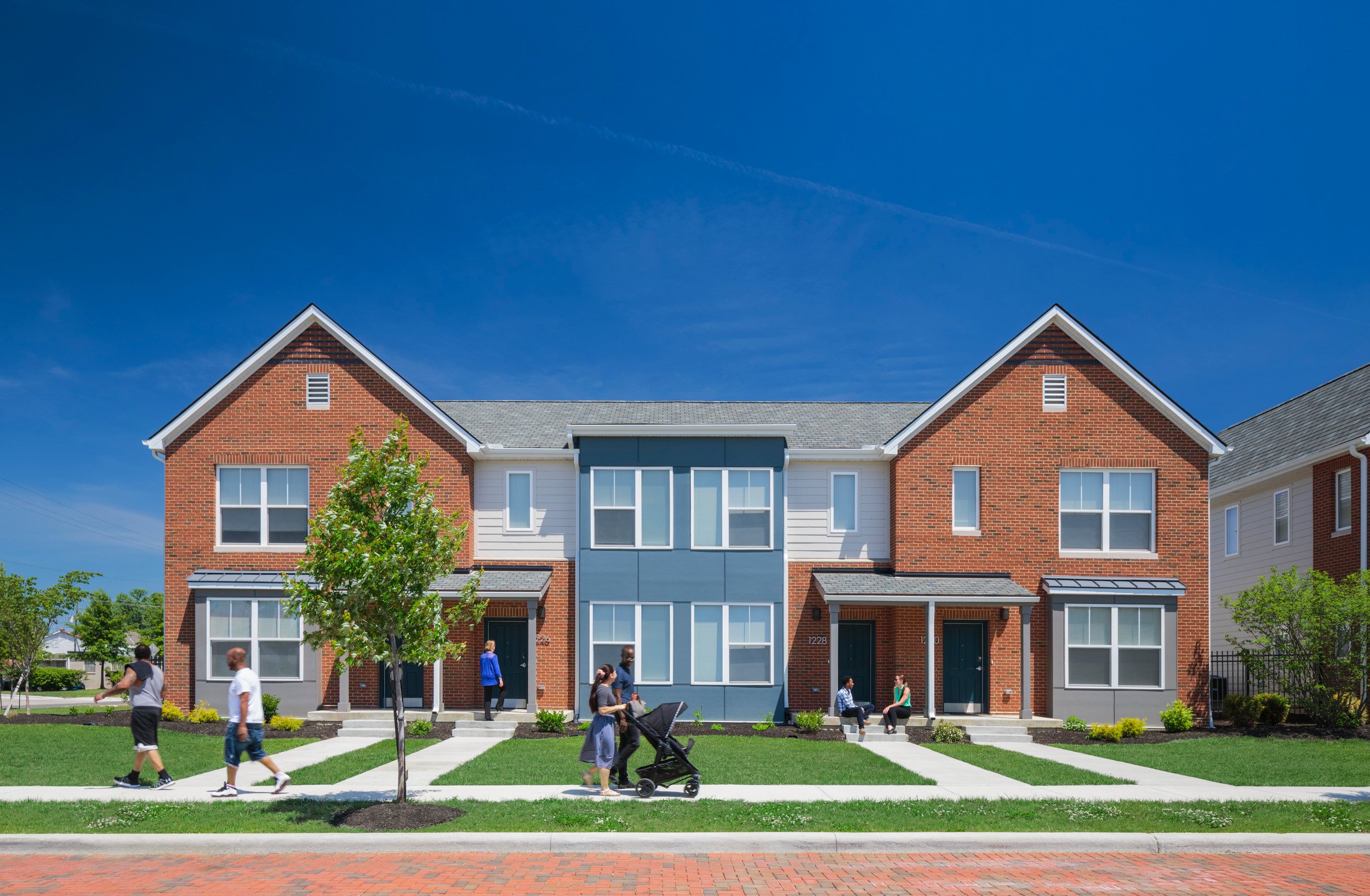
Facilitating the transition from leased to owned community spaces constitutes an act of spatial justice. Prior to the commencement of design, advocating for acquisition strategies, financing mechanisms, and governance models that enable permanent ownership can fundamentally alter a project’s trajectory.
Community Land Trust advocacy
The Community Land Trust model — pioneered by Black civil rights activists in the American South in the late 1960s — separates land ownership from building ownership. This permanently removes land from speculative markets, insulating communities from displacement. CLTs use long-term ground leases to ensure that space remains accessible and community-controlled across generations.
Anti-displacement design
Implementing mixed-use programming that generates revenue can subsidize community-serving functions and stabilize a building’s purpose during economic fluctuations. Designing for long-term operational efficiency, such as incorporating passive systems and adaptable floor plates, reduces maintenance and adaptation costs over time.
Safety Beyond Surveillance
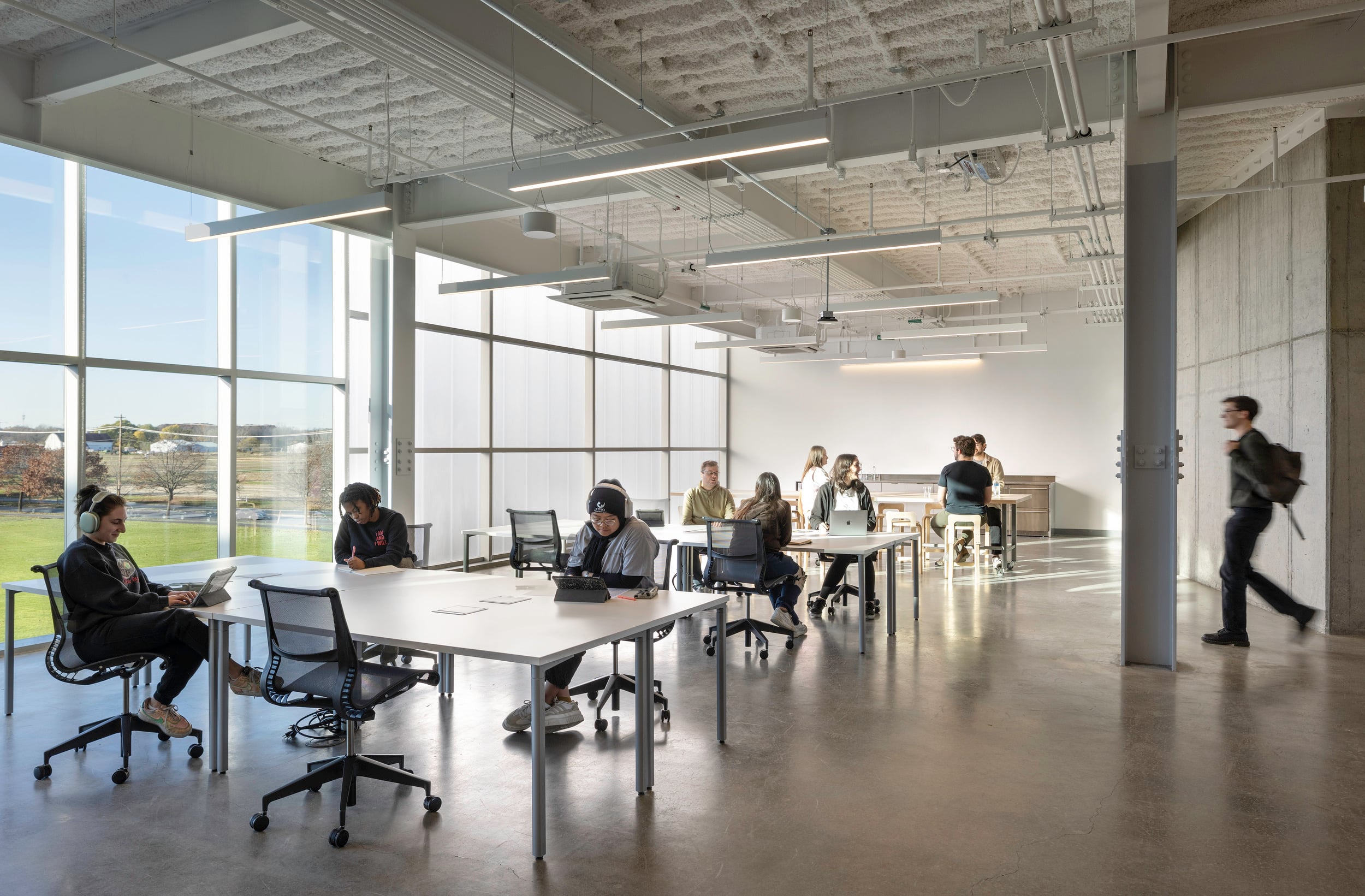
For Black and LGBTQ+ communities, conventional safety design measures such as bright lighting, open sightlines, and visible security infrastructure can inadvertently reproduce the very conditions that render spaces threatening.
If you consciously make a space “ugly” or more accurately “anesthetic” there is a conscious effort of exclusion whether one realizes it or not. Harsh, cold overhead lighting is meant to keep people alert, anxious, visible to surveillance, and discourages loitering. You are not welcome.”
– Marcus Myerholtz, AIA, Project Architect
These observations are not merely aesthetic; they reflect underlying design intentions.
Authentic safety is multi-layered, context-specific, and defined by the community itself. It functions at multiple scales, including the city block, building entry, and individual room. Importantly, it differentiates between visibility—being recognized by one’s community—and exposure—being monitored by historically oppressive systems. The objective is to create environments that provide refuge without imposing restrictions and foster presence without vulnerability.
Lighting as shelter, not spectacle
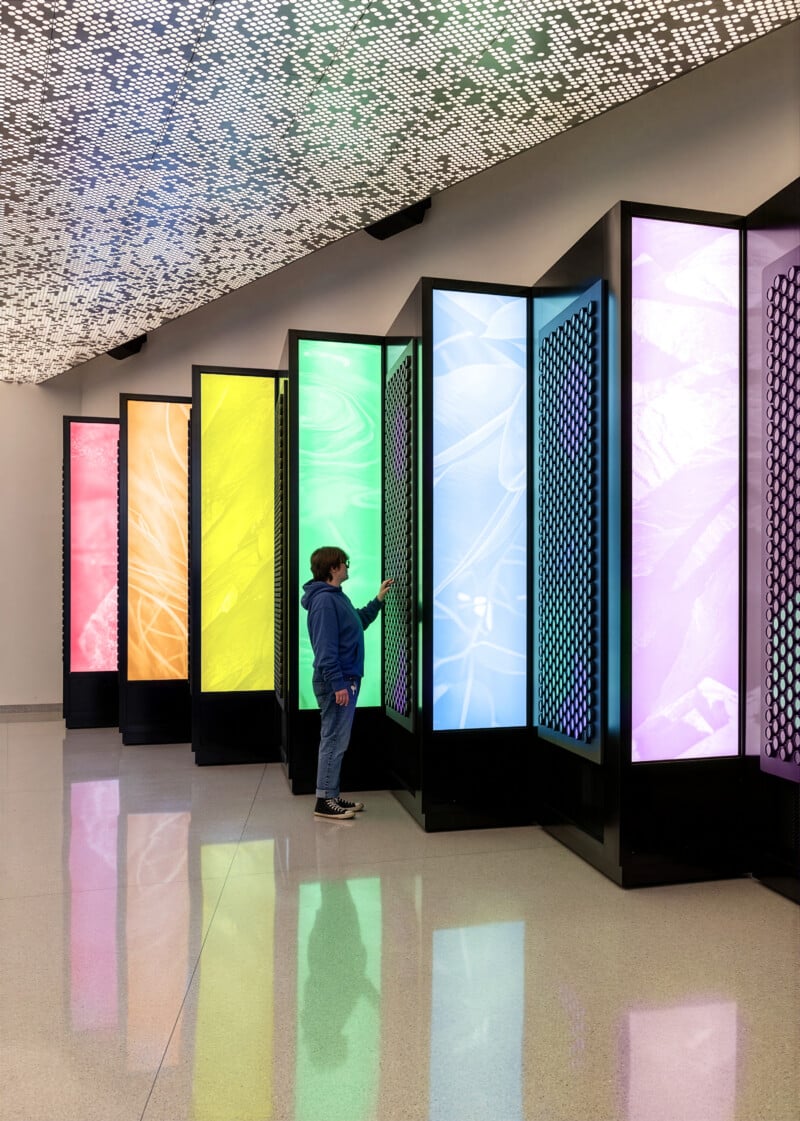
Research conducted by Arup and the University of Westminster indicates that LGBTQ+ individuals consistently prefer soft, layered lighting environments over harshly lit institutional spaces, which are often associated with alienation and surveillance. Strategic warmth in lighting is not merely an amenity; it serves as a meaningful signal.
Strategic sightlines
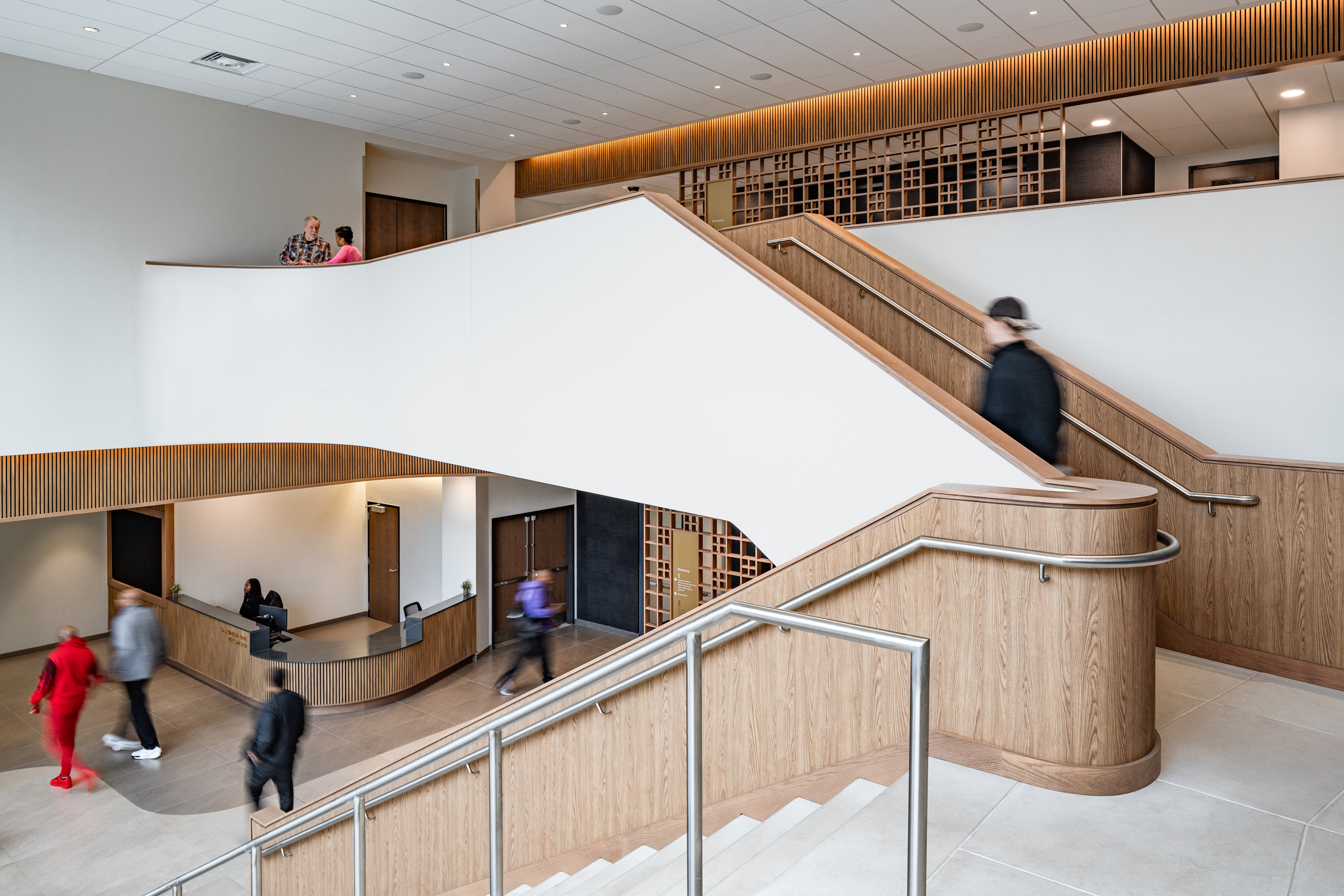
Thoughtfully designed sightlines reinforce individual agency. Features such as semi-enclosed alcoves, vegetation screens, elevated terraces, and partial walls enable occupants to observe and be observed according to their own preferences.
Threshold design
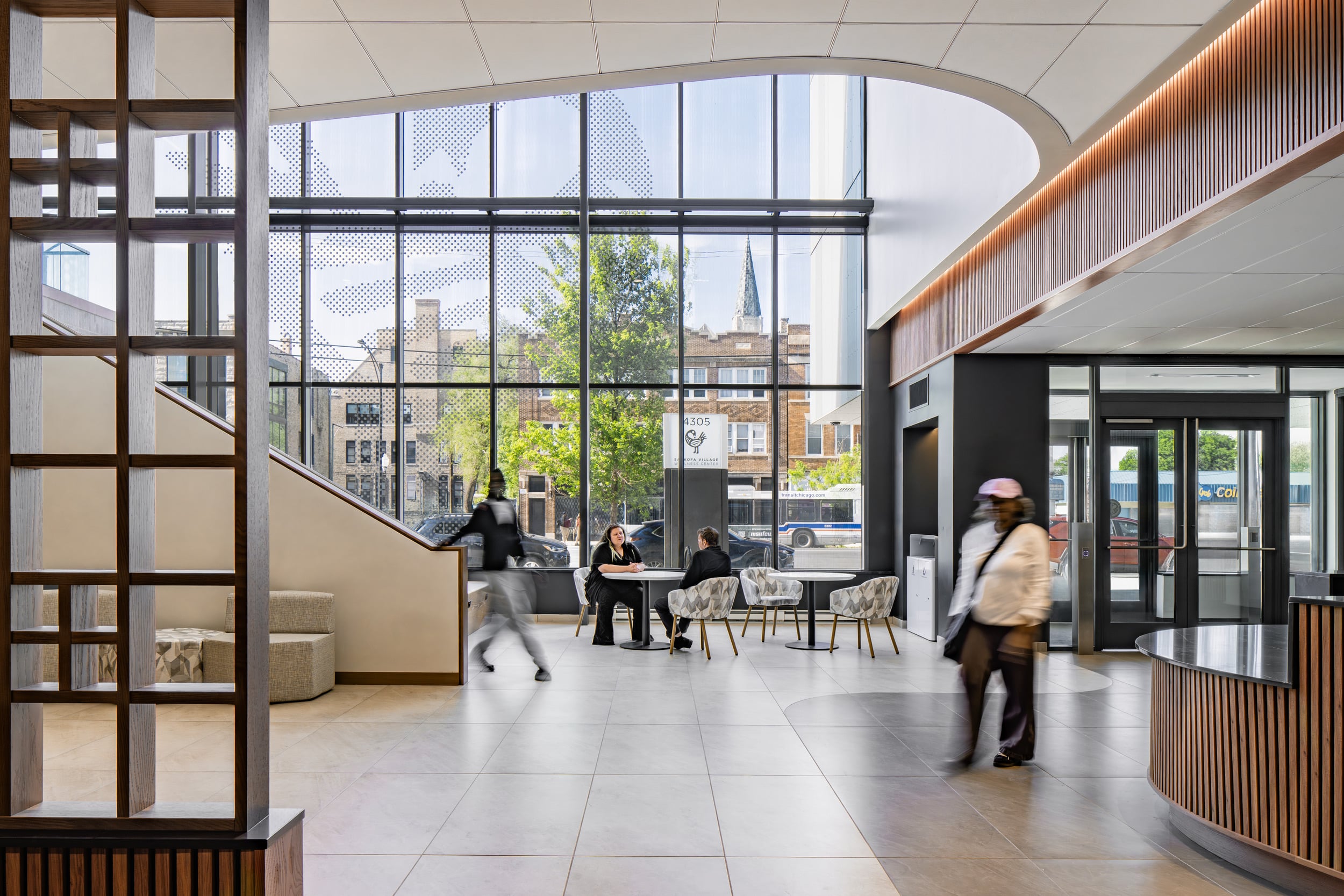
The entryway is the initial point at which safety is either established or denied. Highly transparent entryways allow passersby to observe interior activity before entering, thereby reducing psychological barriers for individuals who have historically felt unwelcome in public spaces.
De-emphasizing security infrastructure
Visible security infrastructure communicates the intended beneficiaries of a space’s protection. In environments designed for Black and queer communities, entry sequences should prioritize a welcoming atmosphere over one of scrutiny. Integrating security measures discreetly contributes to a cohesive rather than punitive spatial experience.
Flexibility as Identity
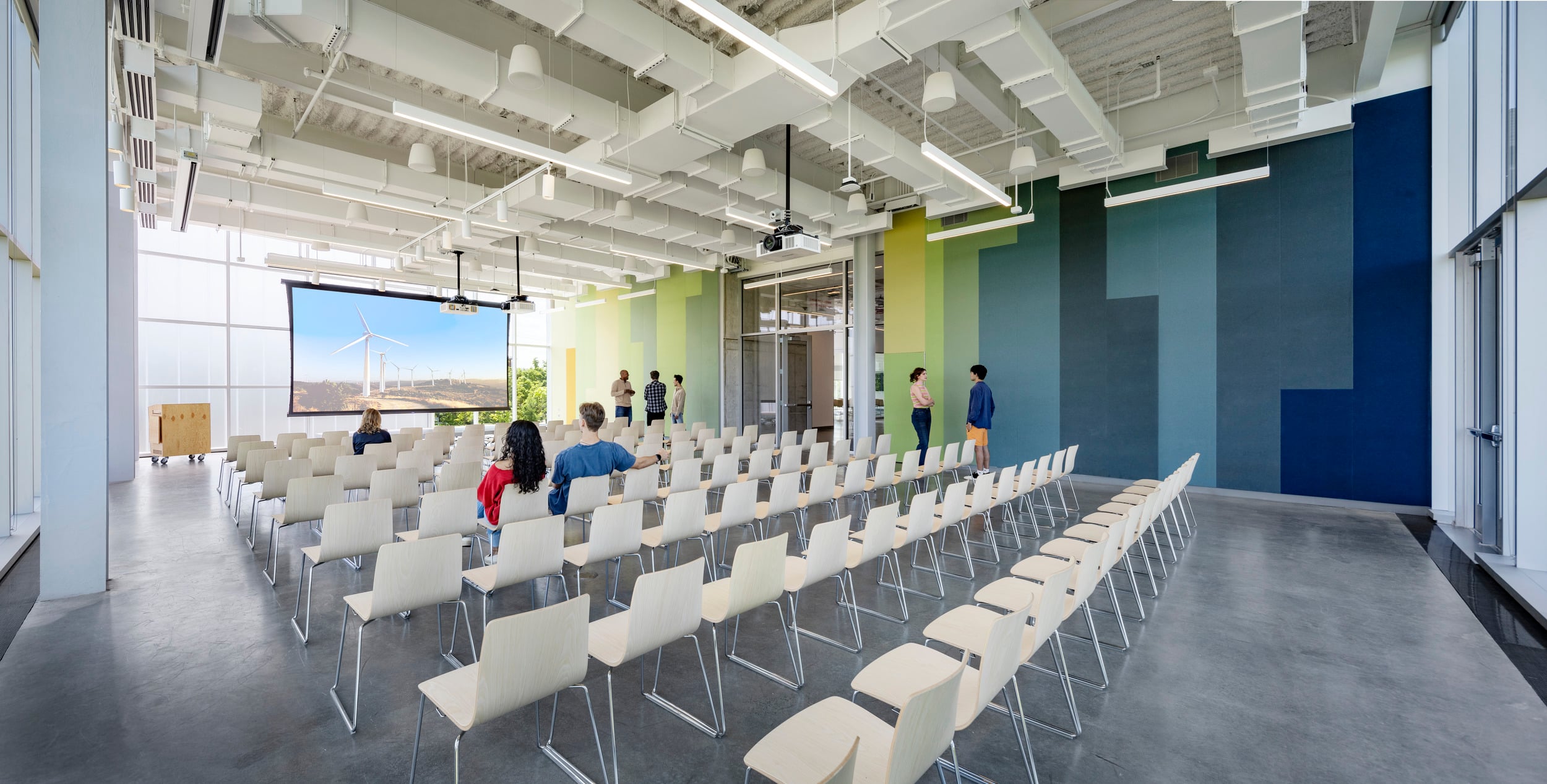
Spaces are frequently conceptualized as either public or private, performative or contemplative, daytime or nighttime, formal or informal. These binary frameworks, rooted in heteronormative and hierarchical traditions, have dominated design practice for centuries. Such categorizations are insufficient for Black and LGBTQ+ communities, whose spatial practices are inherently fluid, creative, and resistant to rigid classification.
Flexible design cannot erase historical exclusion, but it actively resists perpetuating it. A space that maintains a strong identity while accommodating multiplicity across time, function, and atmosphere is inherently more resilient, inclusive, and dynamic.
All-gender facilities
Gender-inclusive flexibility should extend to all spaces within a building, not solely restrooms. Locker rooms, changing areas, and private spaces should be designed according to all-gender standards, incorporating full-height privacy enclosures, inclusive signage, and spatial organization that avoids binary assumptions.
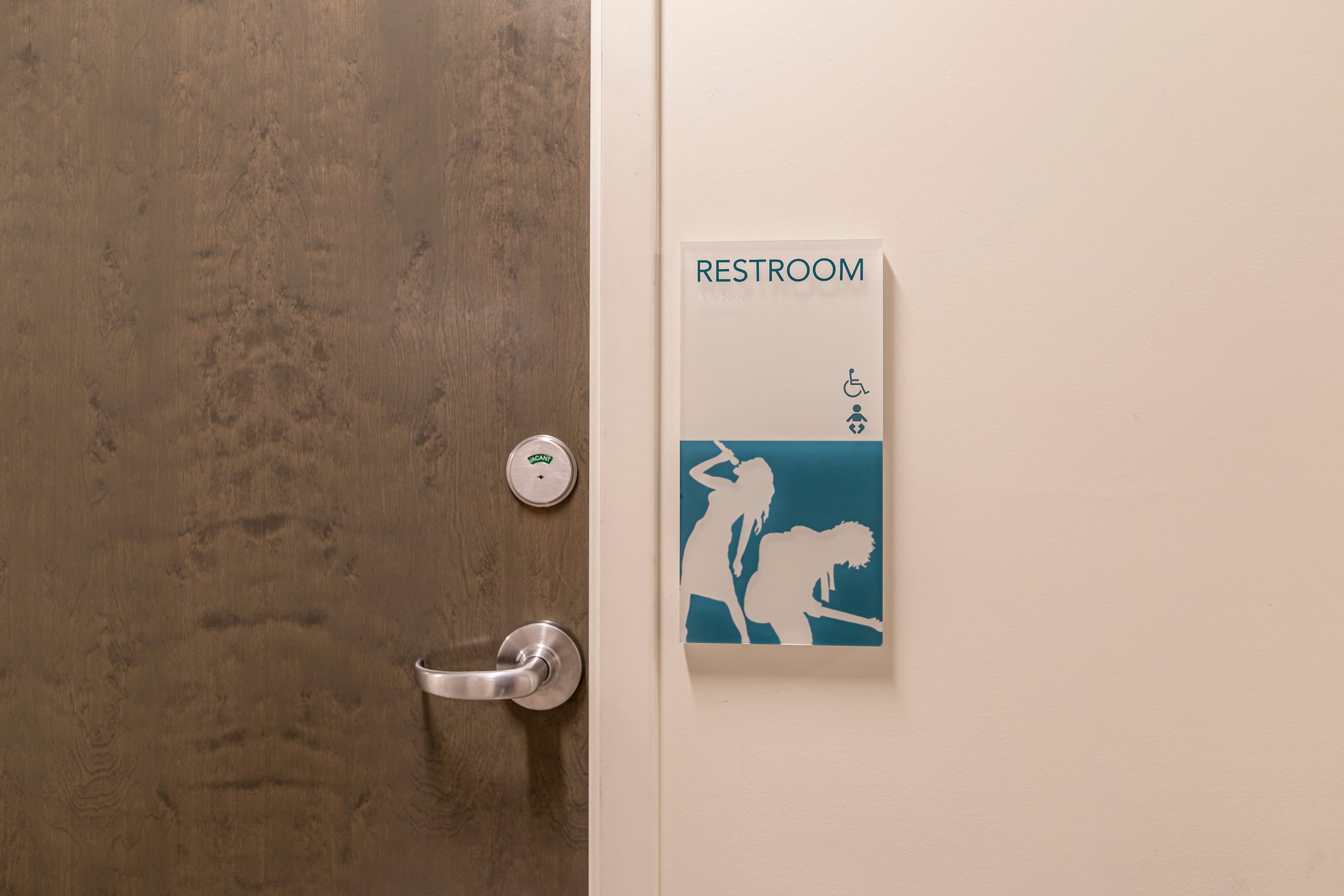
Day and night transition sequences
We intentionally consider how a building’s atmosphere transitions between daytime and nighttime use, employing strategies such as programmable lighting, retractable service infrastructure, and scalable entry sequences. These physical transformations communicate to occupants that the space is designed for their needs at all times. Adaptable spaces also represent an investment in long-term operational resilience.
Cultural Memory Made Material
For Black and LGBTQ+ communities, whose histories have been systematically excluded from official archives, public monuments, and urban environments, the importance of cultural storytelling is especially pronounced. When new community spaces neglect to acknowledge the histories they inhabit, they risk perpetuating further erasure.
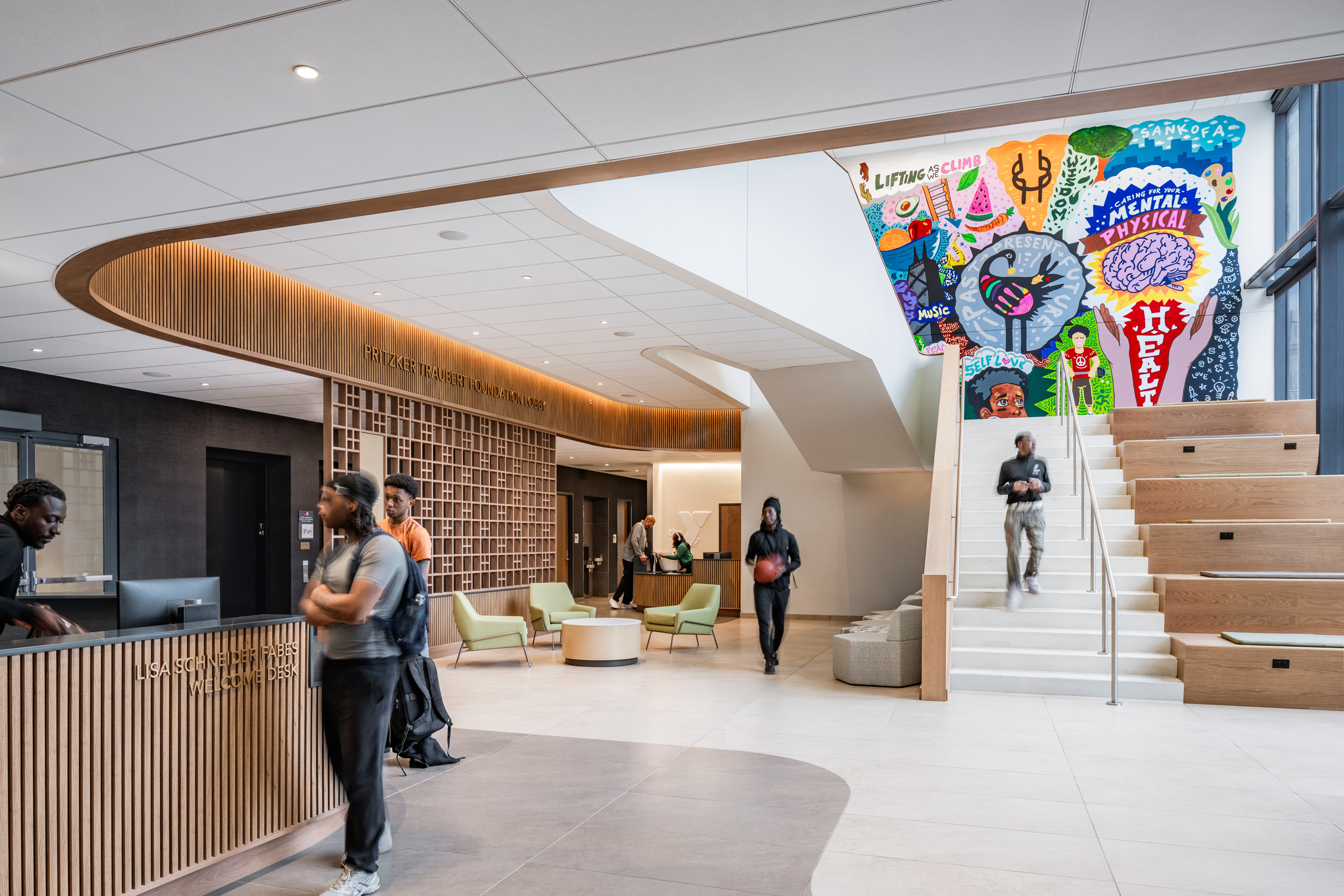
Integrating cultural memory into a building’s physical structure communicates to the community that their narratives are valued. Decisions such as naming rooms, commissioning permanent installations by local artists, and sourcing materials from community-based suppliers create spaces that foster a sense of belonging for those historically excluded.
Permanent art integration
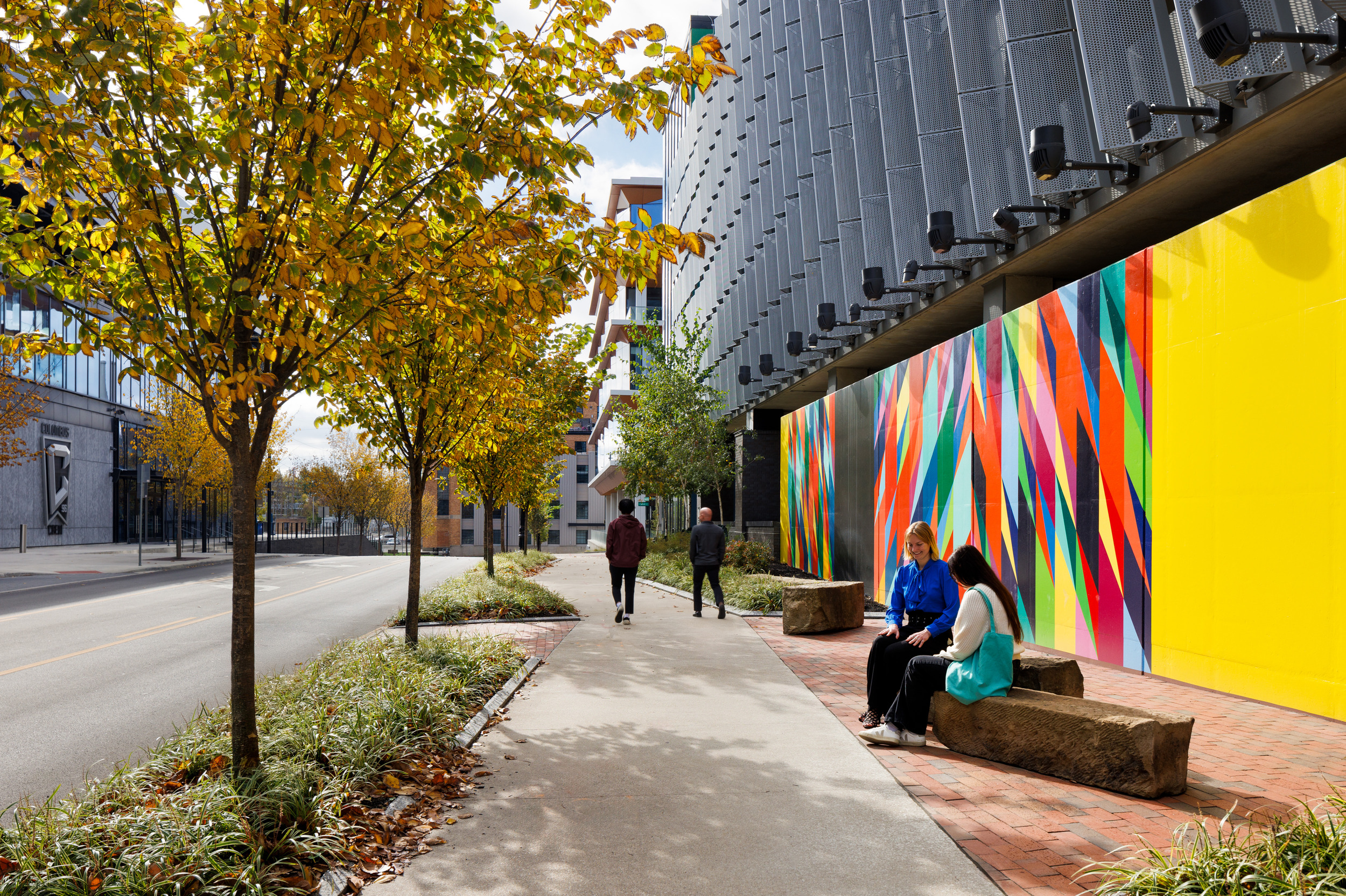
Whenever possible, commission site-specific, permanent artworks by local, minority, or LGBTQIA+ artists. Integrating art directly into architecture, rather than treating it as an afterthought, signals a sense of permanence within the space.
Material sourcing as solidarity
Where feasible, procure materials and construction services from Black-owned and LGBTQ+-owned businesses. This approach extends the project’s investment beyond the building itself, circulating resources within the community it is intended to serve.
Archive and exhibition infrastructure
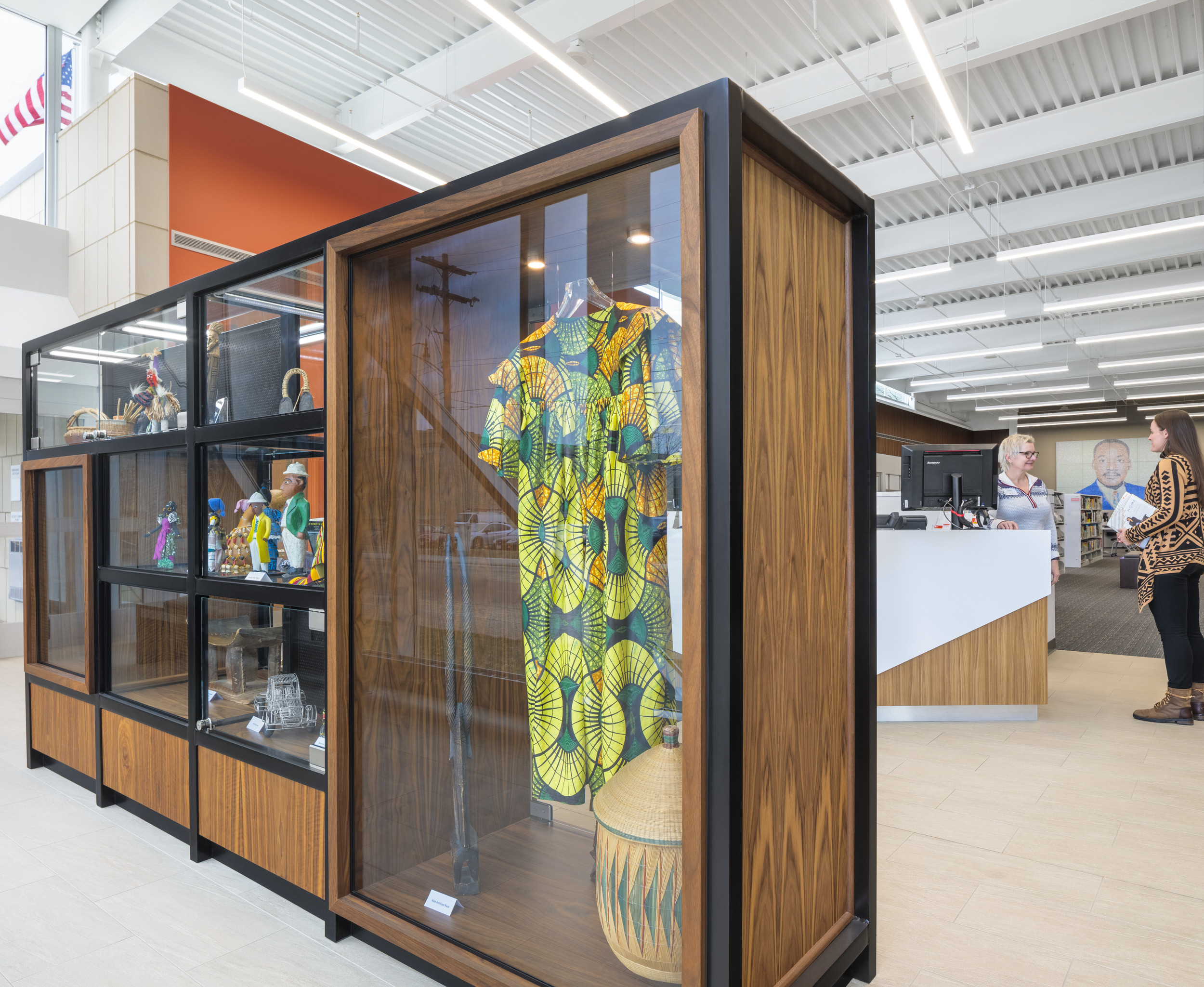
Design permanent infrastructure to support the display and preservation of community archives, including dedicated wall and display case systems, climate-controlled storage for physical materials, and digital infrastructure for rotating exhibitions.
Spatial storytelling
Consider how circulation through a building can serve as a narrative device. An entry sequence that guides occupants through a timeline of community history before reaching a space dedicated to contemporary celebration transforms each arrival into an act of remembrance. Signage, material choices, and spatial transitions can collectively create a journey that honors the past and affirms the present.
Building something that lasts
“In the words of one of Chicago’s greatest architects, Louis Sullivan: ‘They will tear down your building in 25 years, all that will remain are its ideas.’ The ideas, intentions, and aspirations of a society are embedded in Architecture.
The buildings we design are one part of our role in protecting the health, safety, and welfare of not only our clients, but the communities we serve, but the ideas and thinking that give meaning and value to buildings are why our work matters. To exclude, segregate, or negate the existence of people is to undermine the foundational values of our profession.”
– Marcus Myerholtz, AIA, Project Architect