Healing through Housing
Two housing projects show how housing becomes the starting point for reintegration.
Every year, millions of people transition from incarceration, recovery programs, and emergency shelters into communities where they hope to rebuild their lives. For many, reentry carries the promise of a fresh start, but it can also mean returning to the same conditions that made stability difficult to achieve in the first place.
The Paradox of Conditional Stability
Reintegration often asks people to rebuild before they have the stability to begin.
One of the most challenging aspects of reintegration is that progress depends on multiple supports working together. A person needs a job to qualify for housing, but they also need a permanent address to apply for most jobs. Someone managing a behavioral health condition requires consistent treatment, but consistent treatment depends on having a stable environment. When one support falls out of place, the others become harder to hold onto.
Across these experiences, one need remains foundational: safe, stable housing. Research consistently links housing instability with higher risks of recidivism, relapse, and continued homelessness. Stable housing, by contrast, is associated with stronger health, recovery, employment, and reentry outcomes.
Many programs have responded to this need by providing housing assistance during reintegration. But housing alone is not enough. To support reintegration, housing must connect residents to a wider network of care. Design can either make those connections easier to access or add another layer of difficulty for people already navigating a complex transition.
Design Framework for Reintegration
Across housing typologies and project scales, choice, connection, and continuity offer a framework for designing housing that supports reintegration. Site planning can bring residents closer to transit, care, education, and employment. Program organization can make daily routines easier to perform. Shared spaces can create opportunities for connection without removing privacy. Light, color, scale, and material choices can help a place feel less institutional and more like somewhere people can begin again.
Choice
After long periods of instability, daily decisions can feel out of reach. Choices about where to gather, when to seek privacy, how to personalize space, and how to move through shared environments give residents more control over daily life. Over time, these moments help restore a sense of personal agency.
Connection
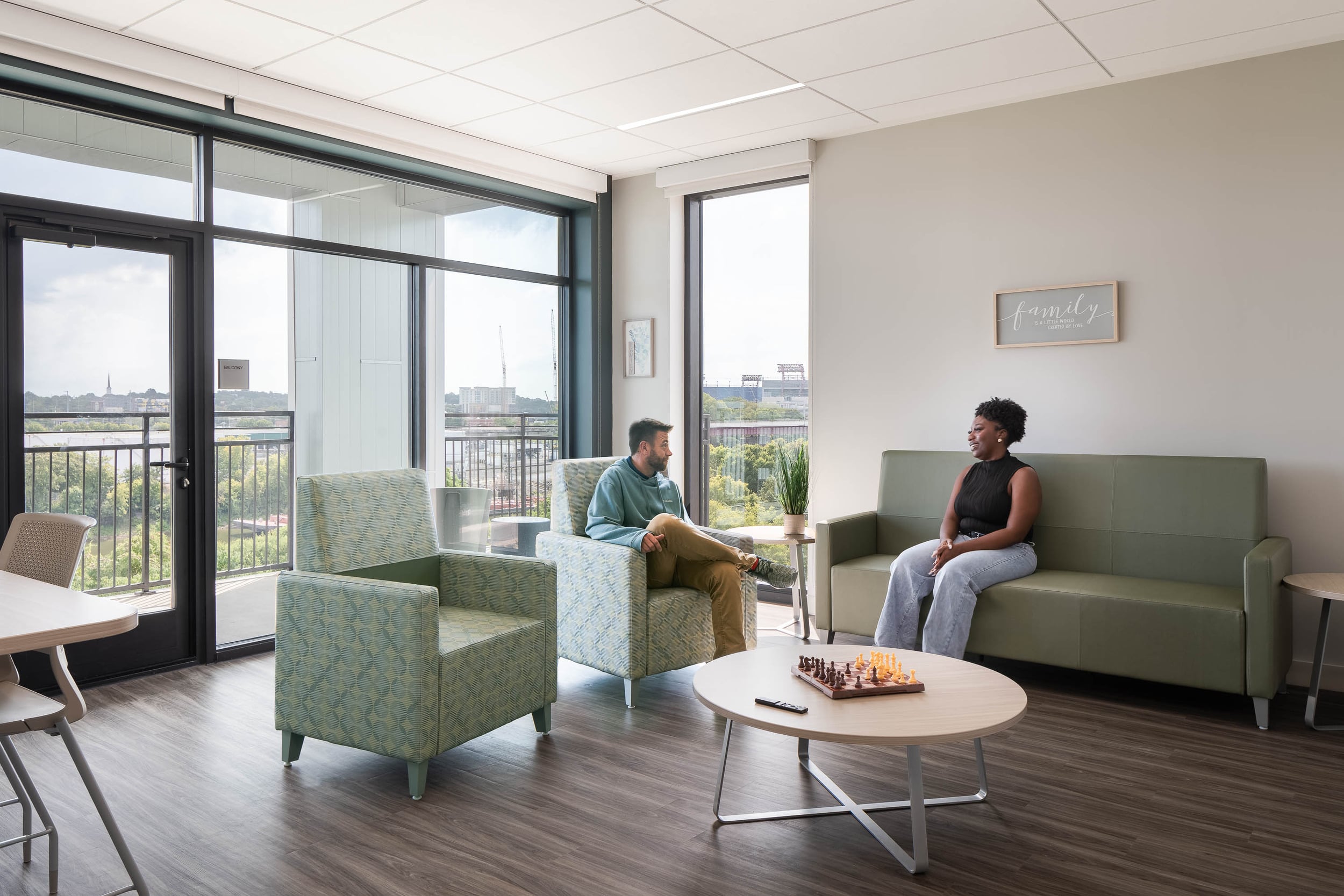
People navigating reintegration often return with a fragile sense of trust and belonging. Even when support exists, reaching for it can feel difficult. Shared spaces can create low-pressure opportunities to be near others and build familiarity over time. A porch, courtyard, common room, or visible path through a building can make connection feel available without making it feel forced.
Connection also extends to how housing meets its surroundings. Many people transitioning back into society return to environments where reintegration is difficult to sustain. When services are distant and public transportation is limited or nonexistent, care becomes harder to reach.
Support doesn’t always need to sit within the same building, but it should be easily accessible. Housing near health care, peer support, and employment counseling reduces the burden of navigating disconnected systems. Moreover, when housing is located near public amenities (e.g., libraries, parks, and community centers), residents have more opportunities to reconnect with their surroundings in everyday, informal ways.
Comfort
Many residents carry the effects of trauma or chronic stress, and overstimulating environments can keep the body in a state of fight or flight, making it harder to feel secure. Spaces become more supportive when they feel calm, legible, and residential in character. Light, acoustics, material warmth, and scale all shape how a space is experienced.
A corridor with natural light and clear wayfinding can ease anxiety and support orientation. Within residential units, balanced daylight and acoustic separation can improve sleep and restoration. Materials with a residential character signal dignity and permanence, reinforcing a sense of belonging rather than transience.
Reintegration across different housing models
The following case studies examine how choice, connection, and comfort are applied across two housing models designed for reintegration: one short-term and one long-term.
Strobel House
Permanent Supportive Housing is a housing model for people who have experienced long term homelessness, or who have disabilities that make it difficult to maintain housing on their own. Unlike transitional housing, residents are not required to move out after a set period. They sign a standard lease, pay rent (usually around 30 percent of their income, with subsidies covering the rest), and have the same rights and responsibilities as other renters. The supportive component typically comes through on-site case management, mental health care support, and other wraparound services.
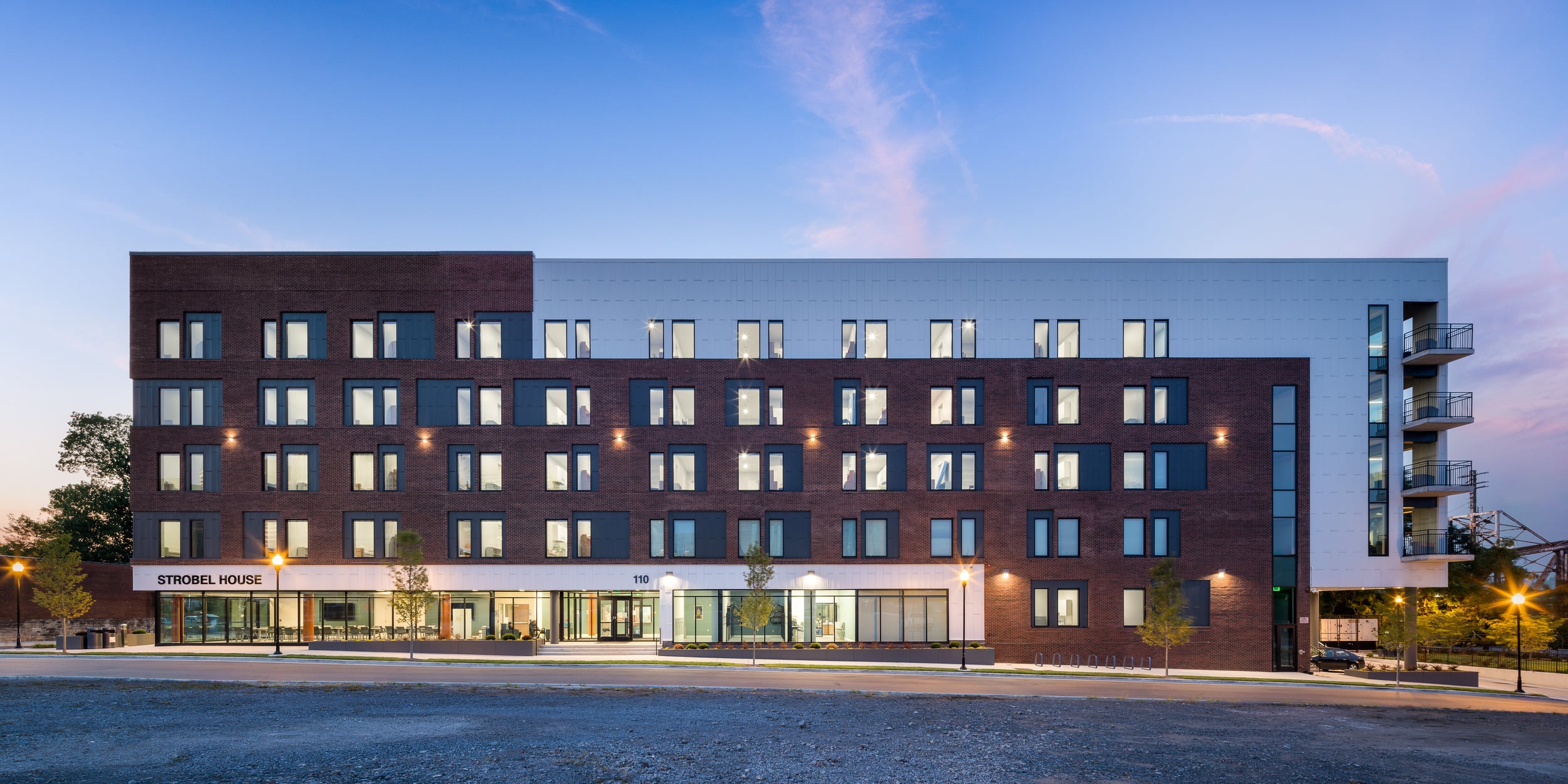
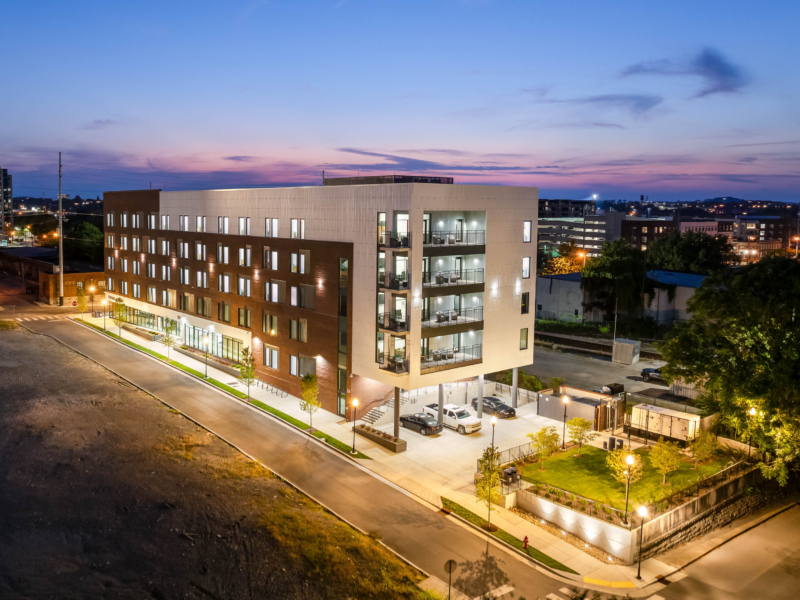
In cities like Nashville, where people experiencing chronic homelessness make up nearly half of the city’s unhoused population, permanent supportive housing offers long-term stability with continued support for those who need it most.¹ Located near Nashville’s East Bank, Strobel House provides 90 furnished apartments. Half are reserved for people experiencing chronic homelessness, while the other half serve unhoused veterans, young adults, and LGBTQ+ individuals, many of whom are also navigating mental health challenges or addiction recovery.
Housing with Dignity
Strobel House supports reintegration by pairing long-term tenancy and on-site services with a visible location in Nashville’s changing urban core. Designed to avoid the visual stigma often associated with service-based housing, Strobel House reflects the scale and character of new residential development across Nashville.
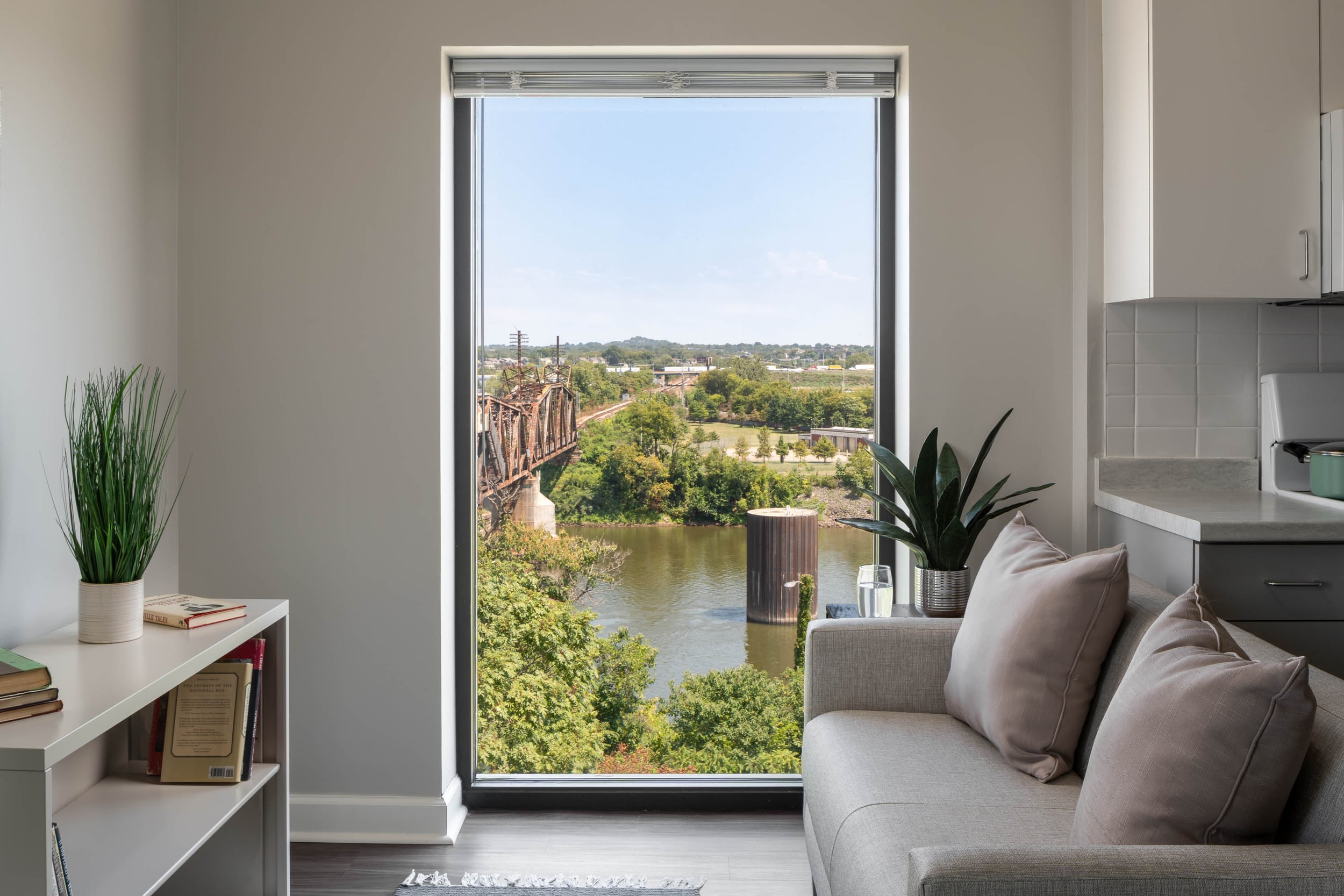
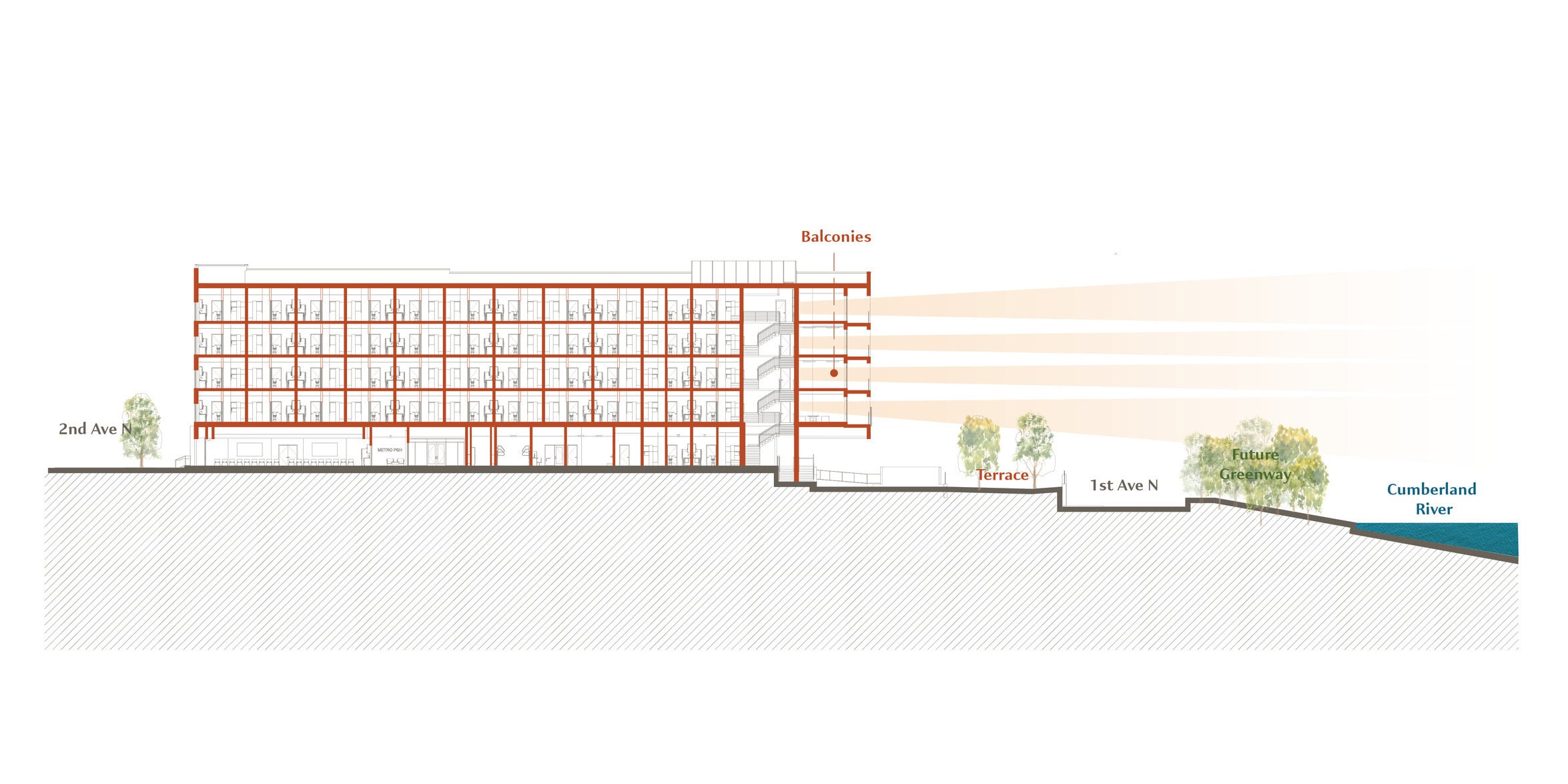
Each apartment provides a bedroom, full bathroom, and kitchen, giving residents the privacy and autonomy needed to build daily routines. Shared amenities, including laundry rooms, community spaces, and outdoor balconies, extend support beyond the individual unit by creating opportunities for social connection. The ground floor provides offices for on-site support services and visiting case management, along with a computer lab, multipurpose rooms, and outdoor terraces. Communal spaces feature a calming earth-tone palette, making the building feel more settled and familiar to residents.
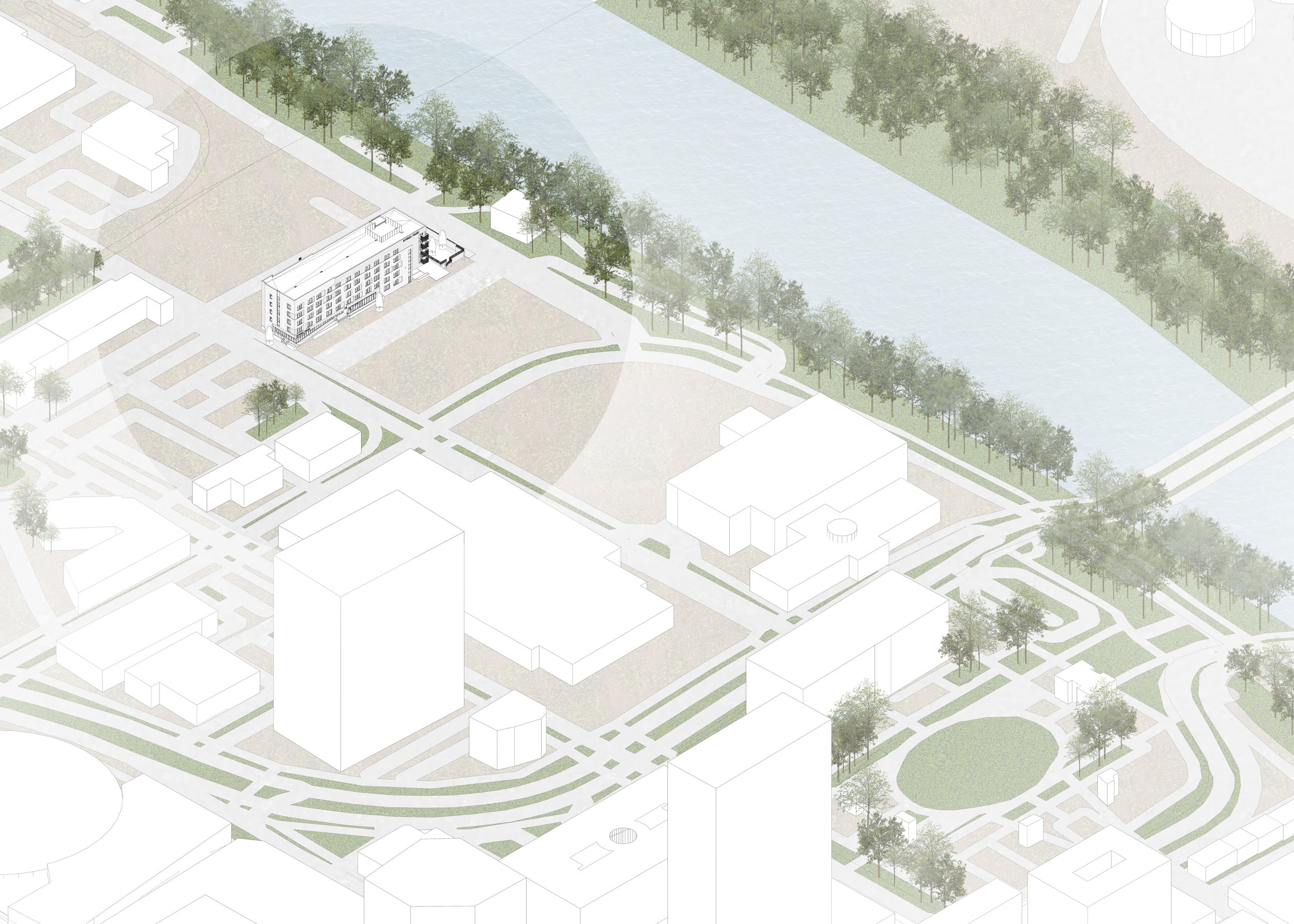
Strobel House prioritizes visibility along Nashville’s burgeoning riverfront as part of its reintegration strategy. Throughout the building, residents’ views toward the downtown skyline and Cumberland River place them within the city’s daily life. Exterior public art featuring resident stories gives the building an identity shaped by the people who live there. In a high-demand urban area where rising housing costs often push vulnerable residents out of view, Strobel House makes permanent supportive housing visible, dignified, and connected to the city around it.
Residences at Swope Behavioral Health
People leaving inpatient behavioral care often need environments where they can gradually regain autonomy while remaining connected to care. Transitional housing can bridge this gap by making recovery part of daily life.
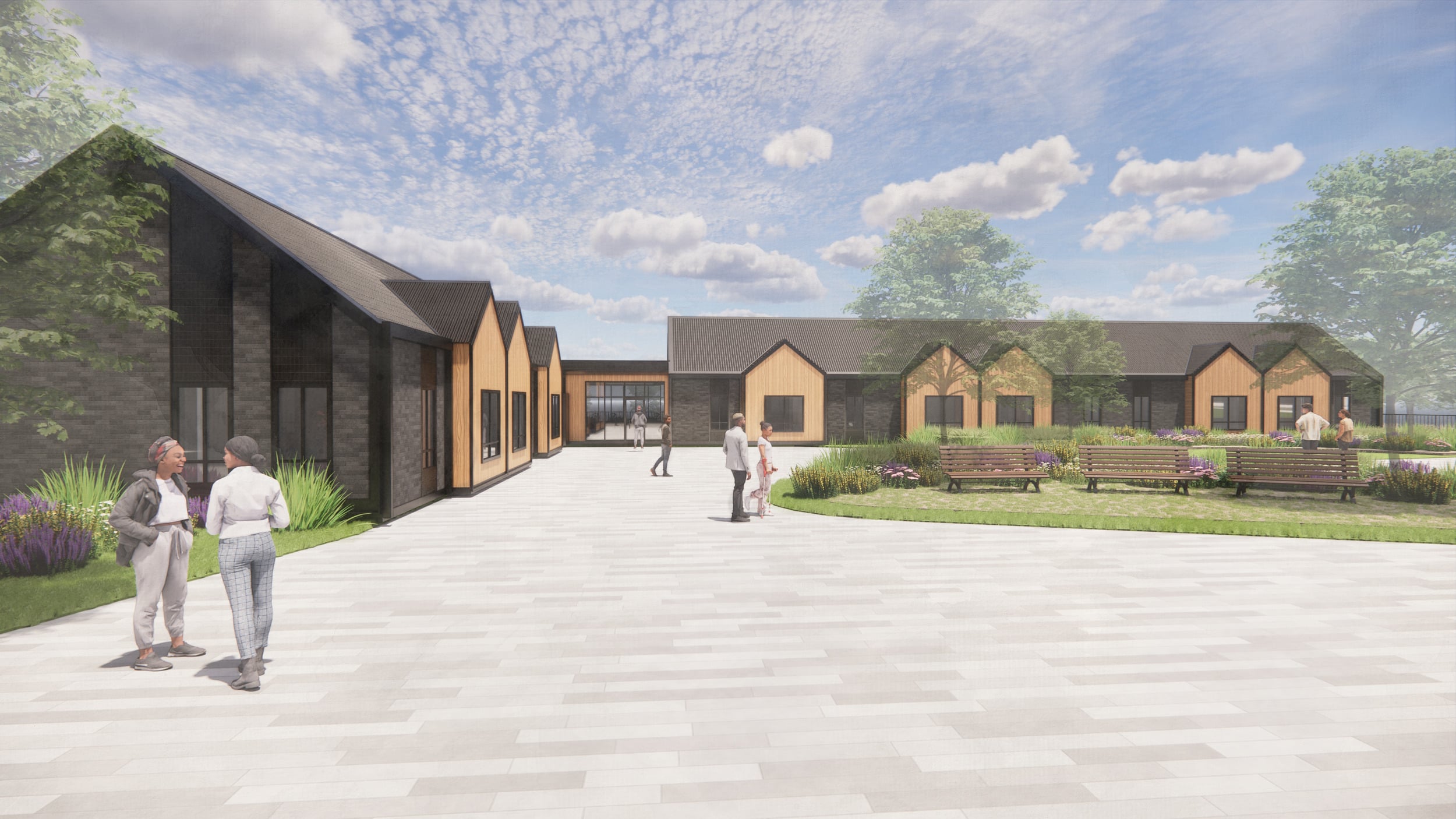
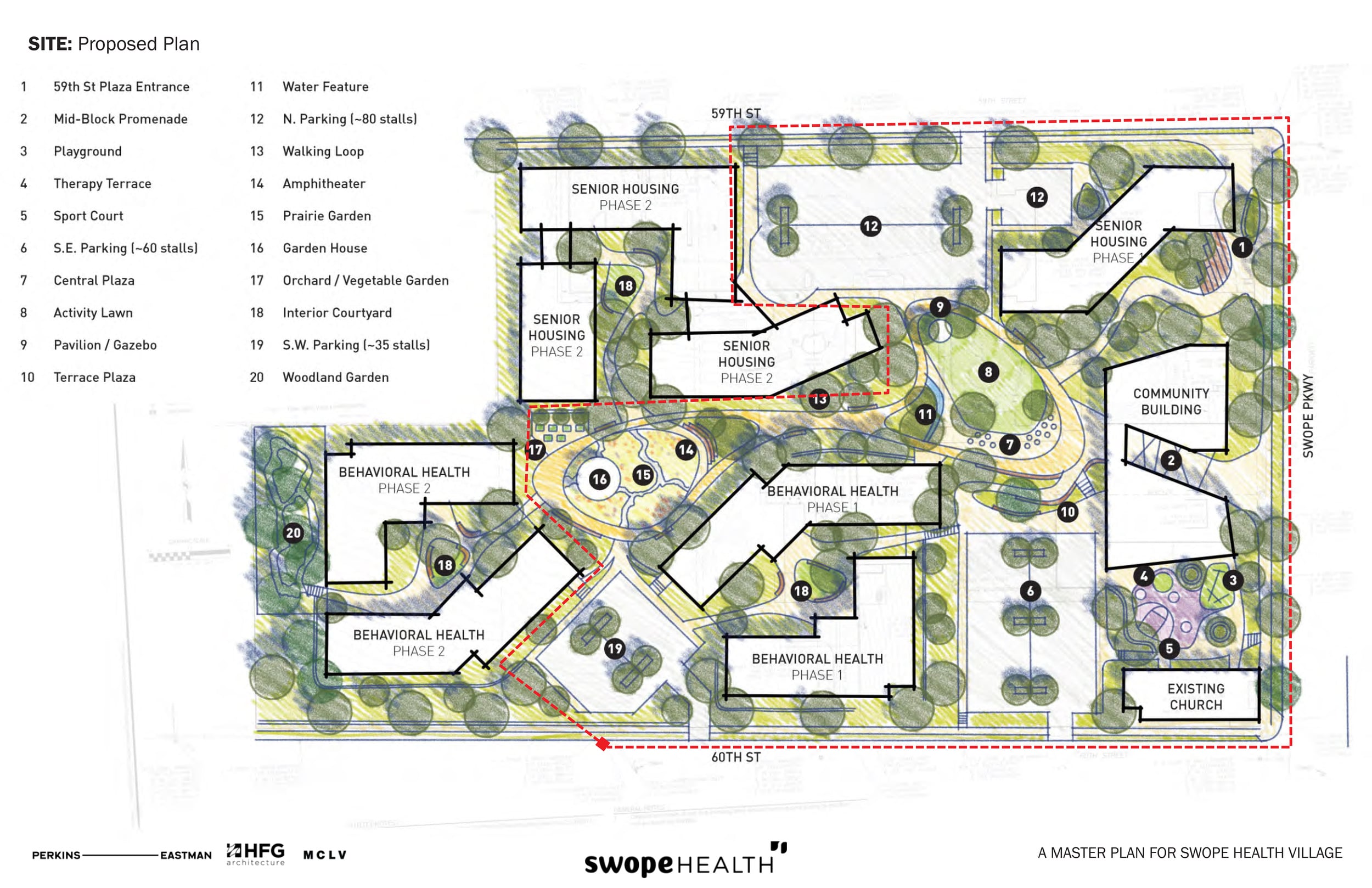
The Residences at Swope Behavioral Health provide independent living for adults transitioning out of inpatient behavioral care. The 36-unit phase is part of Swope Health Village, a 12-acre master-planned campus designed by Perkins Eastman. Grounded in the belief that the physical environment can shape health and recovery, the campus connects transitional housing with outpatient clinical services, behavioral health care, recovery programs, and outdoor spaces. The development reframes behavioral health as a holistic, wraparound model, demonstrating how transition is most effective in a restorative, community-centered environment.
Recovery Within Reach
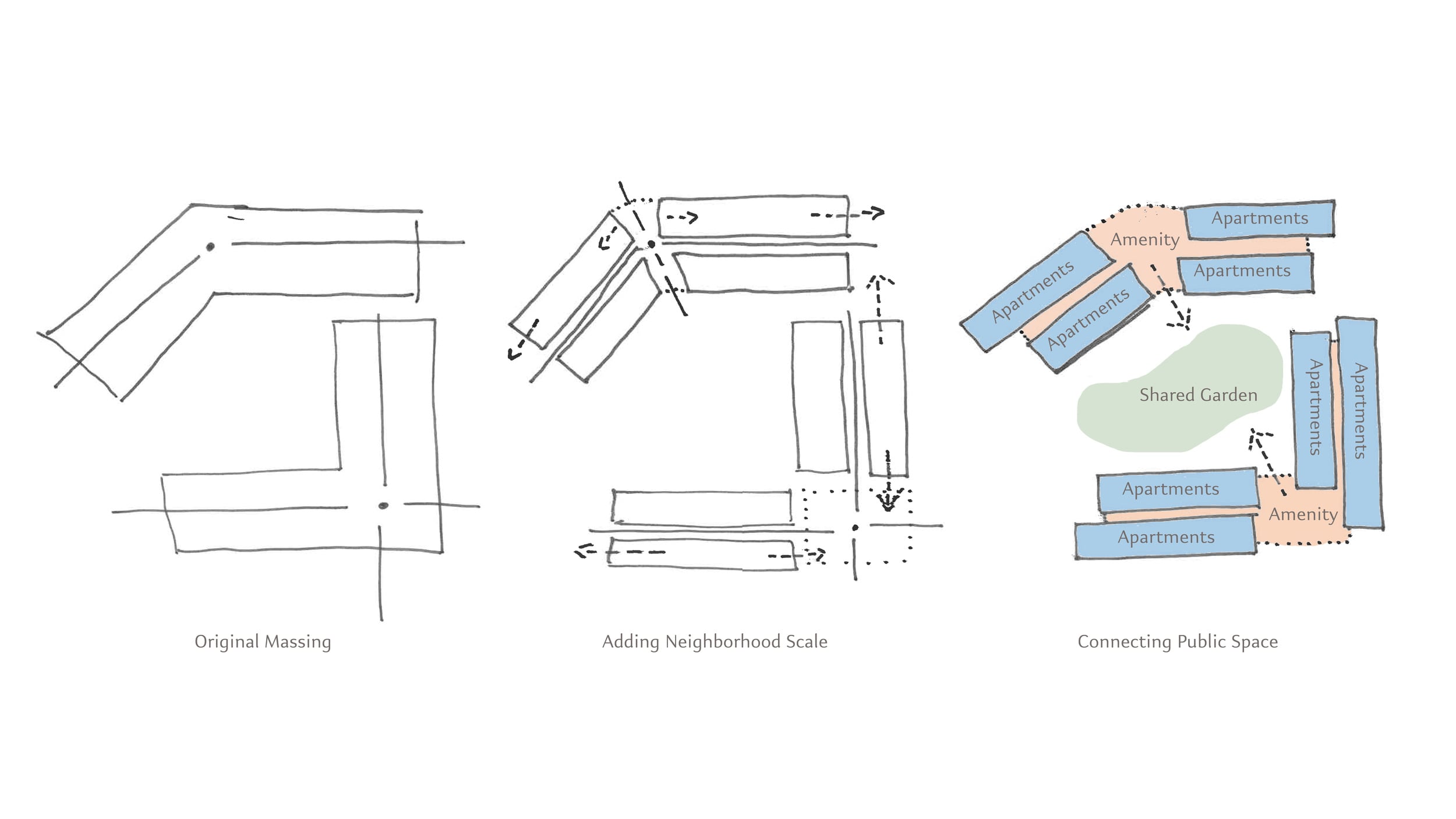
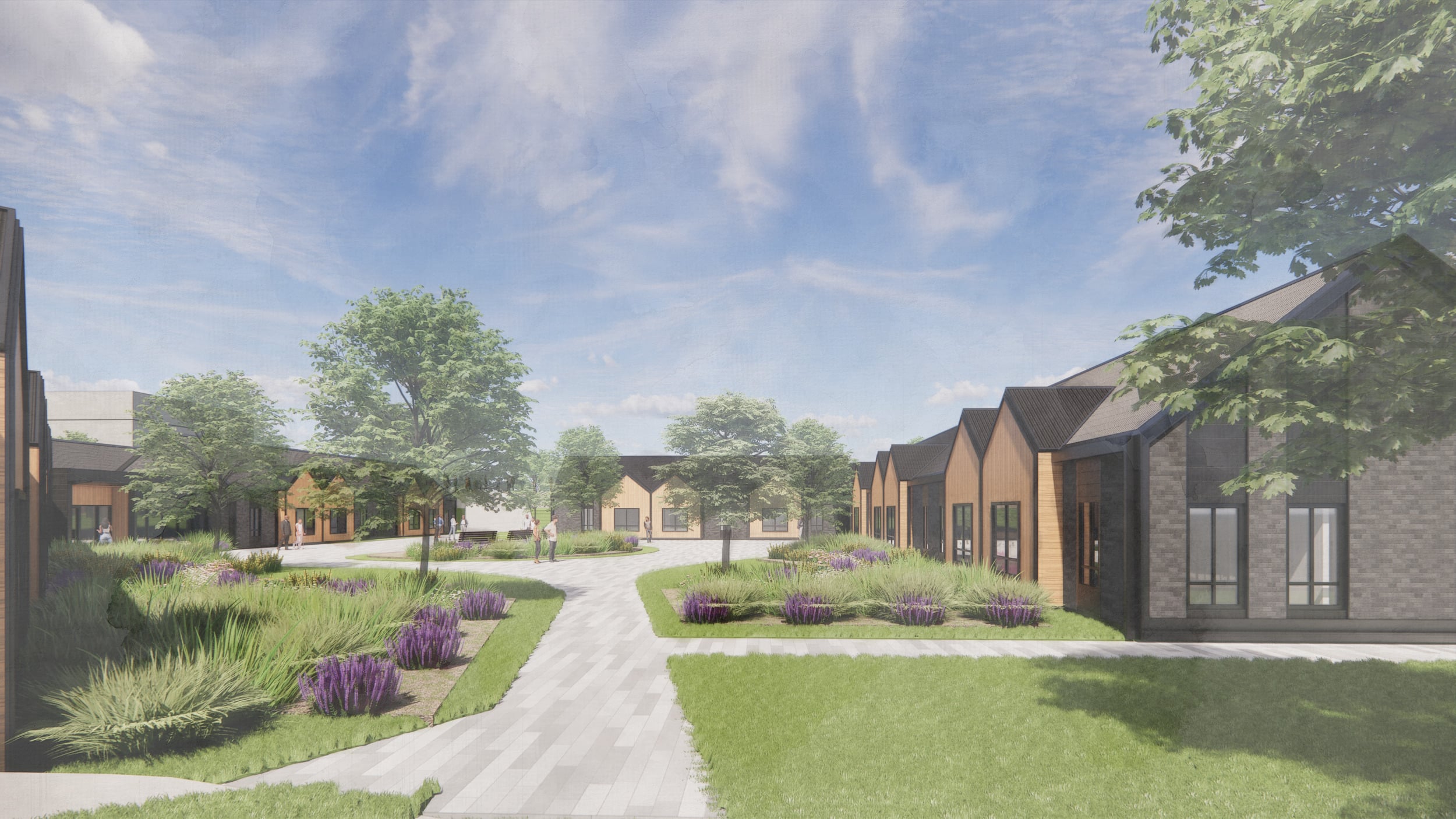
The residences occupy two single-story buildings arranged around a landscaped garden along the southern edge of Swope Health Village. Positioned between behavioral health services and the community center, the buildings keep care and community within reach as residents rebuild consistency and independence. Garden paths extend into the larger campus, creating clear connections to shared resources without making movement feel clinical or prescribed.
Familiarity Through Form and Materiality
The buildings draw from familiar residential forms rather than the visual language often associated with clinical environments. Gabled roofs and smaller building volumes create a more approachable, human-scaled environment. The consistent use of brick and wood across the interior and exterior reinforces the project’s residential character while tying it back to the campus fabric.
Each unit includes a kitchen, bathroom, and living space with views toward the gardens. Shared spaces, including case management offices and flexible gathering areas, sit at the center of each building and open toward the landscape, giving residents a calm place to gather and decompress as they move between care and daily life.
Closing Thoughts
Architecture can’t rewrite policy or legislation on its own, but it can shape the conditions people encounter as they move toward greater independence. The organization of space, its scale, and the signals it sends about trust and autonomy all influence whether reintegration feels like a return to community or an extension of institutional life.